
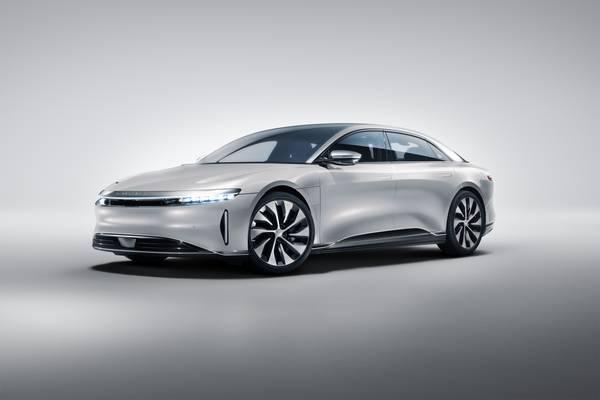

Saudi Arabia is strengthening its position in the global electric vehicle industry after billionaire Prince Alwaleed bin Talal Al Saud acquired a 5% stake in Lucid Group, the U.S.-based electric vehicle manufacturer.
The investment, disclosed in a regulatory filing in July 2026, involves approximately 19.5 million Lucid Class A shares. The purchase makes Prince Alwaleed a significant individual shareholder in the company and adds another layer to Saudi Arabia’s already deep relationship with Lucid.
The move comes at an important moment for Lucid, which is working to reduce costs, expand its vehicle lineup and establish itself as a serious competitor in the global EV market.
Who Is Lucid Motors?
Lucid Motors is an American electric vehicle manufacturer headquartered in California. The company is best known for its Lucid Air, a luxury electric sedan positioned around long driving range, efficiency and advanced technology.
Lucid has attempted to differentiate itself from competitors through:
- Long-range electric vehicles
- High-efficiency electric powertrains
- Advanced battery technology
- Luxury vehicle design
- Software-defined vehicle technology
- High-performance electric drivetrains
However, the company faces the same challenge confronting many newer EV manufacturers: scaling production while controlling costs and reaching profitability.
Prince Alwaleed’s 5% Lucid Investment
Prince Alwaleed’s investment was revealed through a U.S. Securities and Exchange Commission filing.
The filing showed that he owns approximately 19.5 million Class A shares, representing about 5% of Lucid’s outstanding shares. The investment was made personally rather than through Saudi Arabia’s sovereign wealth fund.
Reports said the investment was made after Lucid’s market value fell below $2 billion. Lucid had also been dealing with market pressure following reports about its financial position, which the company denied.
Lucid welcomed the investment, describing it as an independent vote of confidence in the company.
The disclosure also triggered a sharp rise in Lucid’s share price, highlighting how closely investors are watching the company’s future.
Saudi Arabia Already Has a Major Stake in Lucid
Prince Alwaleed’s investment should not be viewed in isolation.
Saudi Arabia’s Public Investment Fund (PIF) has been one of Lucid’s most important investors since 2018. PIF originally committed more than $1 billion to Lucid to support the development and commercial launch of its first electric vehicle.
Lucid’s 2026 proxy statement shows that PIF, directly and through its subsidiary Ayar, remained the company’s controlling shareholder, with approximately 60% beneficial ownership based on the filing.
That makes Lucid an important part of Saudi Arabia’s broader strategy to build influence in future industries beyond oil.
Why Saudi Arabia Is Betting on Electric Vehicles
Saudi Arabia has been pursuing economic diversification under its Vision 2030 programme.
Electric mobility fits into that strategy because it can create opportunities across several industries, including:
- Vehicle manufacturing
- Battery technology
- Automotive supply chains
- Charging infrastructure
- Renewable energy
- Artificial intelligence
- Autonomous driving
Rather than simply importing electric vehicles, Saudi Arabia is attempting to develop capabilities across the wider EV ecosystem.
Lucid is one of the most visible examples of this strategy.
Lucid’s Saudi Manufacturing Ambitions
Lucid is also developing manufacturing capacity in Saudi Arabia.
The company refers to its Saudi facility as Advanced Manufacturing Plant-2, or AMP-2. Lucid’s latest regulatory filing states that the semi-knocked-down portion of the facility has been completed, while construction of the completely built-up portion is substantially complete, with commissioning and fit-out work continuing.
This gives Saudi Arabia a direct connection to EV manufacturing rather than simply being an investor in an American car company.
The relationship also includes a major vehicle purchase agreement.
Under an agreement signed with the Saudi government, Saudi entities can purchase up to 100,000 Lucid vehicles over a 10-year period, with a minimum purchase quantity of 50,000 vehicles and an option for another 50,000.
That agreement could provide Lucid with an important source of demand as it expands production.
Saudi Investment Goes Beyond Lucid Ownership
Saudi Arabia’s involvement with Lucid is becoming broader than traditional equity investment.
In April 2026, Ayar Third Investment Company, an affiliate of PIF, agreed to purchase $550 million of Lucid convertible preferred stock.
At the same time, Lucid expanded its relationship with Uber around autonomous vehicles. Uber increased its total investment in Lucid to $500 million and expanded its commitment to purchase at least 35,000 Lucid vehicles for a future global robotaxi service.
This connects Lucid’s EV manufacturing ambitions with another major growth area: autonomous transportation.
The Challenges Facing Lucid
Despite strong technology and significant financial backing, Lucid still faces major challenges.
The global EV market has become increasingly competitive, with companies such as Tesla, BYD and established traditional automakers expanding their electric vehicle offerings.
Lucid must also solve several business problems:
- Increase vehicle production
- Reduce manufacturing costs
- Expand its customer base
- Improve profitability
- Develop more affordable models
- Compete in increasingly crowded EV markets
The company’s technology has attracted attention, but technology alone is not enough to guarantee commercial success.
Lucid needs to demonstrate that it can turn its engineering advantages into sustainable sales and profits.
What the Investment Means for Lucid
Prince Alwaleed’s 5% investment provides more than additional capital.
It also sends a signal that prominent Saudi investors continue to see long-term potential in Lucid despite the company’s challenges.
For Lucid, having both PIF and other major Saudi investors supporting the company could provide an important financial and strategic foundation as it expands manufacturing and develops new vehicles.
However, the investment does not eliminate the company’s operational challenges.
Lucid will still need to increase production, control expenses and attract significantly more customers if it wants to compete with larger EV manufacturers.
What It Means for Saudi Arabia
For Saudi Arabia, Lucid represents an opportunity to participate in an industry that could become increasingly important to the global economy.
Electric vehicles combine several technologies that Saudi Arabia is seeking to develop, including advanced batteries, software, artificial intelligence and clean-energy systems.
Building manufacturing capabilities around these technologies could also help create new jobs and develop local expertise.
The strategy is consistent with Saudi Arabia’s broader effort to diversify its economy and reduce its long-term dependence on oil.
What It Could Mean for Africa’s EV Market
Saudi Arabia’s growing involvement in electric vehicles could eventually have implications beyond the Middle East.
As EV manufacturing, battery technology and charging infrastructure develop in the region, new commercial relationships could emerge between Middle Eastern and African markets.
Africa is also experiencing growing interest in electric mobility, particularly in areas such as electric motorcycles, buses, battery swapping and urban transportation.
Investment into EV manufacturing and supporting technologies could therefore contribute to a broader shift toward electric transportation across emerging markets.
For countries such as Kenya, where electric motorcycles and other forms of electric mobility are already expanding, developments in global EV supply chains could eventually influence vehicle availability, technology costs and investment opportunities.
The Future of Lucid Motors
Lucid’s future will depend on whether it can successfully transition from a premium EV manufacturer into a larger-scale automotive business.
The company has significant backing from Saudi Arabia, a growing manufacturing presence in the Kingdom and partnerships involving major companies such as Uber.
At the same time, it faces intense competition and substantial financial and operational pressures.
Prince Alwaleed’s 5% investment therefore represents an important vote of confidence, but it is not a guarantee of success.
Final Thoughts
Prince Alwaleed bin Talal’s acquisition of a 5% stake in Lucid Motors highlights the growing role of Saudi investors in the global electric vehicle industry.
The investment is particularly significant because it adds to an already deep Saudi-Lucid relationship. The Public Investment Fund remains Lucid’s controlling shareholder, while the company is building manufacturing capacity in Saudi Arabia and has a major vehicle purchase agreement with the Saudi government.
For Lucid, the immediate challenge is turning that financial and strategic support into higher production, stronger sales and sustainable profitability.
For Saudi Arabia, the bigger objective is clear: use investments in companies such as Lucid to build capabilities in electric vehicles and other technologies that could play a major role in the post-oil economy.
The success or failure of that strategy could make Lucid an important case study in how oil-rich economies are attempting to become major players in the global electric mobility industry.
