
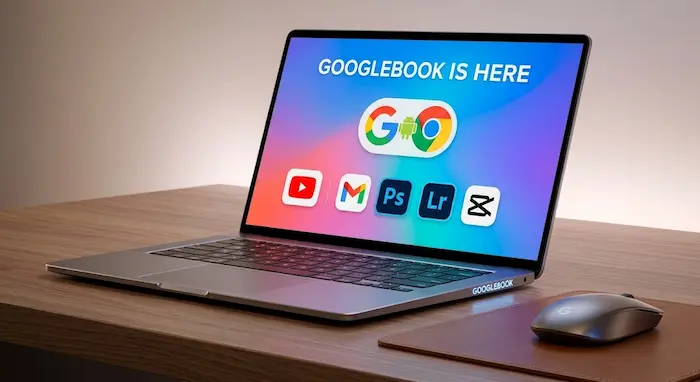

Google has officially launched Googlebook, a new category of laptops designed to combine the strengths of Android and ChromeOS while putting Google’s Gemini artificial intelligence at the centre of the laptop experience.
Pre-orders opened on September 21, 2026, with the first Googlebook laptops starting at $899. The first devices are being produced by Acer, ASUS, Dell, HP and Lenovo. Google says the initial models are designed around Android users who want a laptop that works more seamlessly with their phone.
Unlike a traditional Chromebook, Googlebook is positioned as a premium laptop platform. Google says it brings together Android’s app ecosystem and technology with the desktop foundations of ChromeOS, while adding Gemini-powered features designed to help users work, create and manage information.
For Kenyan consumers, the announcement is particularly interesting because Android dominates the smartphone market, while many people still depend on Windows laptops and older refurbished machines for serious work.
What Is Googlebook?
Googlebook is Google’s new laptop platform designed around Android technology, ChromeOS desktop foundations and Gemini Intelligence.
Google first introduced the concept in May 2026, describing it as a new laptop category rather than simply another Chromebook. The company said the platform was being created for a world where people increasingly move between smartphones and laptops while expecting their devices to work together.
The September launch now gives the platform a clearer commercial identity.
Googlebook laptops are designed to provide:
- A full desktop Chrome browser
- Android apps through Google Play
- Deep Android-phone integration
- Gemini AI features
- Desktop-class creative applications
- Linux development capabilities
- Premium hardware
- Long-term software support
Google says the first Googlebooks start at $899.
Googlebook vs Chromebook
Googlebook should not simply be viewed as a replacement for every Chromebook.
Google describes the two as different categories.
| Feature | Googlebook | Chromebook |
|---|---|---|
| Platform | Android technology + ChromeOS foundations | ChromeOS |
| Market position | Premium laptops | Broad range, including affordable models |
| Gemini AI | Built into the experience | Available through supported Google services |
| Android integration | Core part of the platform | Available, but less deeply integrated |
| Android apps | Yes | Yes |
| Chrome browser | Desktop-class | Core experience |
| Linux development | Yes | Available on supported devices |
| Starting price | $899 | Varies widely |
| Phone integration | Designed around Android phones | Supported |
| Target user | Productivity, creators, developers and premium users | Students, consumers, businesses and everyday users |
Google’s own FAQ describes Googlebook as a new flagship category bringing together Android and ChromeOS technologies, while Chromebooks continue to focus on simplicity, speed and efficiency.
Googlebook Is Built Around Android Phones
One of Google’s biggest selling points is the relationship between the laptop and the user’s Android phone.
Googlebook allows users to move information and tasks between devices more naturally.
For example, Continue On allows users to start certain activities on their phone and continue them on their laptop.
The laptop can also access files stored on the connected Android phone through its Files application.
Another feature, Cast My Apps, allows users to interact with phone applications from a desktop window on the Googlebook.
This could be particularly useful for people who already depend heavily on Android applications but find that their favourite mobile apps are difficult to use on a conventional Windows laptop.
Gemini Is at the Centre of Googlebook
Googlebook is not simply about putting Android apps on a laptop.
Google is also making Gemini a central part of the platform.
One of the headline features is Magic Pointer.
Instead of treating the cursor purely as a navigation tool, Google has designed Magic Pointer to bring Gemini into the user’s current context.
For example, a user can point at information on the screen and ask Gemini to help analyse, organise or act on it.
Google says Magic Pointer can understand text, images and context and only activates when the user summons it.
Rambler turns speech into organised work
Googlebook also introduces Rambler, a voice-based feature designed to turn spoken thoughts into structured content.
A user can speak through notes or ideas, and Rambler can organise the information into headings, action points and formatted content.
Google says Rambler supports multilingual speech, allowing users to switch languages during a conversation.
That could have practical applications in Kenya, where many users communicate across English, Kiswahili and other languages depending on the situation.
Create My Widget Lets Users Build Custom Tools
Another Googlebook feature is Create My Widget.
Instead of requiring users to code a widget manually, Google says they can describe what they want and Gemini can generate a personalised desktop widget.
For example, a user could create a widget for tracking information, displaying updates or monitoring a particular activity.
This reflects a broader shift in computing: users increasingly interact with software by describing what they want rather than navigating complicated menus or building everything from scratch.
Googlebook Comes With Android Apps and Desktop Tools
Google is also trying to solve one of the traditional weaknesses of mobile-focused operating systems: desktop software.
Googlebook combines the Chrome browser with Android applications from Google Play.
Google says users can run applications such as Adobe Photoshop, Adobe Lightroom and CapCut, alongside popular streaming services and Android games.
This is important because a laptop needs to do more than run mobile applications.
People buying premium laptops expect them to handle productivity, creative work, browsing, communication and increasingly sophisticated AI applications.
Googlebook for Developers
Developers are another important target for Googlebook.
Google says the platform includes Antigravity, its AI agent development environment, while developers also receive access to a full Linux terminal.
This allows developers to work with tools such as Claude Code and Antigravity CLI directly on the laptop.
For software developers, this makes Googlebook considerably different from the image of an inexpensive Chromebook used primarily for browsing and basic productivity.
The platform is being positioned as a serious development machine.
Googlebook Hardware
Google is working with several major laptop manufacturers for the first generation.
The initial partners are:
- Acer
- ASUS
- Dell
- HP
- Lenovo
Google says the laptops will use premium materials including aluminium, magnesium alloy and carbon fibre.
Depending on the model, buyers can get displays of up to 2.8K OLED, haptic glass trackpads and backlit keyboards. The devices use Intel or Qualcomm processors and dedicated NPUs capable of more than 45 TOPS. Google quotes battery life of up to 14 hours.
Googlebook Pricing and Availability
Googlebook starts at $899.
At that starting price, the platform is clearly positioned above the cheapest Chromebook and many entry-level laptops.
Google says each Googlebook purchase includes:
- 12 months of Google AI Pro
- 5TB of cloud storage
- Gemini Advanced tools
- 3 months of YouTube Premium
- Adobe Photoshop and other bundled benefits
Google also says Googlebook OS will receive feature updates for up to 10 years.
Pre-orders opened September 21, with devices scheduled to reach U.S. stores from October 4, 2026. Google has also listed launches from October 5 in Canada, the UK, Ireland, France, Germany and Australia. Kenya is not included in Google’s initial launch markets listed in its announcement.
What Googlebook Could Mean for Kenya
Googlebook is particularly interesting in Kenya because Android phones are already a major part of everyday digital life.
Many Kenyan users have an Android smartphone but use a completely different operating system when they move to a laptop.
That can create friction.
Files may need to be transferred manually. Mobile applications may not have desktop versions. Users may move between WhatsApp, email, Google Drive and other services across different devices.
Googlebook’s strategy is to reduce some of that separation.
Example: A Kenyan student
A university student could begin researching an assignment on an Android phone while travelling and continue the work on a Googlebook at home.
Files stored on the phone could be accessible from the laptop, while Android applications could be used alongside the desktop browser.
Example: A Kenyan content creator
A creator could use the laptop for editing, research and publishing while continuing to use Android applications from the connected phone.
Applications such as CapCut and Adobe tools could also provide a more familiar creative workflow.
Example: A Kenyan developer
A developer could use the Linux environment, AI coding tools and desktop browser while still benefiting from Android integration.
This could make the platform particularly interesting to developers building mobile-first products.
But the $899 Price Matters in Kenya
The biggest question for Kenyan consumers may not be what Googlebook can do.
It may be how much it will cost in Kenya.
The official starting price of $899 is roughly equivalent to KSh116,000 before taxes, shipping, retailer margins and other costs, using an illustrative exchange rate of KSh129 to the dollar.
That is not a final Kenyan retail price.
Once a device is imported into Kenya, the final price can be significantly different from its U.S. price.
This means Googlebook is currently positioned much closer to the premium laptop market than the budget laptop market.
For comparison, many Kenyan buyers looking for affordable work laptops continue to consider refurbished business machines from brands such as Dell, HP and Lenovo.
Googlebook will therefore need more than an Android connection to appeal to price-sensitive Kenyan consumers.
Could Googlebook Replace Windows Laptops?
Googlebook is unlikely to make Windows laptops irrelevant overnight.
Windows remains deeply established in businesses, schools, government institutions and professional software environments.
Many organisations also depend on Windows-specific applications.
Googlebook’s approach is different.
Rather than trying to copy Windows, Google is betting that a large Android user base will want a laptop that behaves more like an extension of their phone while still providing a full desktop environment.
The success of that strategy will depend heavily on software compatibility, performance, pricing and availability.
Googlebook and the Future of Laptops
Googlebook represents a broader change happening across the PC industry.
The laptop is increasingly becoming an AI device rather than simply a machine for running traditional applications.
Google is integrating Gemini directly into the desktop experience.
Microsoft has been pushing Copilot and AI PCs.
Apple is integrating Apple Intelligence across its hardware ecosystem.
The competition is therefore shifting toward which ecosystem can make AI useful without making the computer more complicated.
Googlebook is Google’s answer to that challenge.
Frequently Asked Questions
What is Googlebook?
Googlebook is Google’s new premium laptop category combining Android technology, ChromeOS desktop foundations and Gemini AI features.
Is Googlebook a Chromebook?
No. Google describes Googlebook as a new category rather than simply another Chromebook. Chromebooks continue to use ChromeOS, while Googlebook combines Android technology with ChromeOS foundations and is positioned toward premium hardware and AI-powered computing.
How much does Googlebook cost?
Googlebook starts at $899 in the announced launch markets.
Can Googlebook run Android apps?
Yes. Googlebook supports Android applications through Google Play alongside the desktop Chrome browser and other software.
Does Googlebook work with Android phones?
Yes. Android phone integration is one of Google’s central selling points, including phone file access, Continue On and Cast My Apps.
Will Googlebook be available in Kenya?
Kenya is not included among the initial markets listed by Google for the October 2026 launch. Availability in Kenya may depend on Google’s future market expansion and local retail channels.
Is Googlebook good for developers?
Google is positioning Googlebook for developers with a Linux terminal, AI development tools and Antigravity. The platform can also run Android applications and desktop web tools.
How long will Googlebook receive updates?
Google says Googlebook OS will receive regular feature drops and updates for up to 10 years.
Editorial Note
Googlebook specifications, features, pricing and availability in this article are based primarily on Google’s official September 21, 2026 announcements.
The $899 price is the announced starting U.S. price, not a confirmed Kenyan retail price. Kenya is also not listed among Google’s initial launch markets announced for October 2026.
The approximate Kenyan shilling conversion is therefore illustrative only and does not include taxes, shipping, retailer margins or other import costs.
Conclusion
Googlebook is Google’s attempt to rethink what a laptop should be in an Android-first, AI-powered world.
Instead of treating the phone and laptop as separate devices, Google is building the experience around the idea that they should work together.
The platform combines Android’s application ecosystem with ChromeOS’s desktop foundations, adds Gemini-powered features such as Magic Pointer and Rambler, and brings developers a Linux environment and AI development tools.
For Kenya, the idea is particularly relevant because of the country’s large Android user base.
However, price and availability will be critical.
At a starting price of $899 before local costs, Googlebook is positioned firmly in the premium laptop segment. Until Google confirms Kenyan availability and local pricing, most Kenyan buyers will have to continue looking at existing Windows laptops, Chromebooks and other alternatives.
The bigger story is not simply another laptop launch.
Googlebook shows that the next generation of laptops could increasingly be defined by AI, smartphone integration and software ecosystems—not just processor speed and screen size.
