
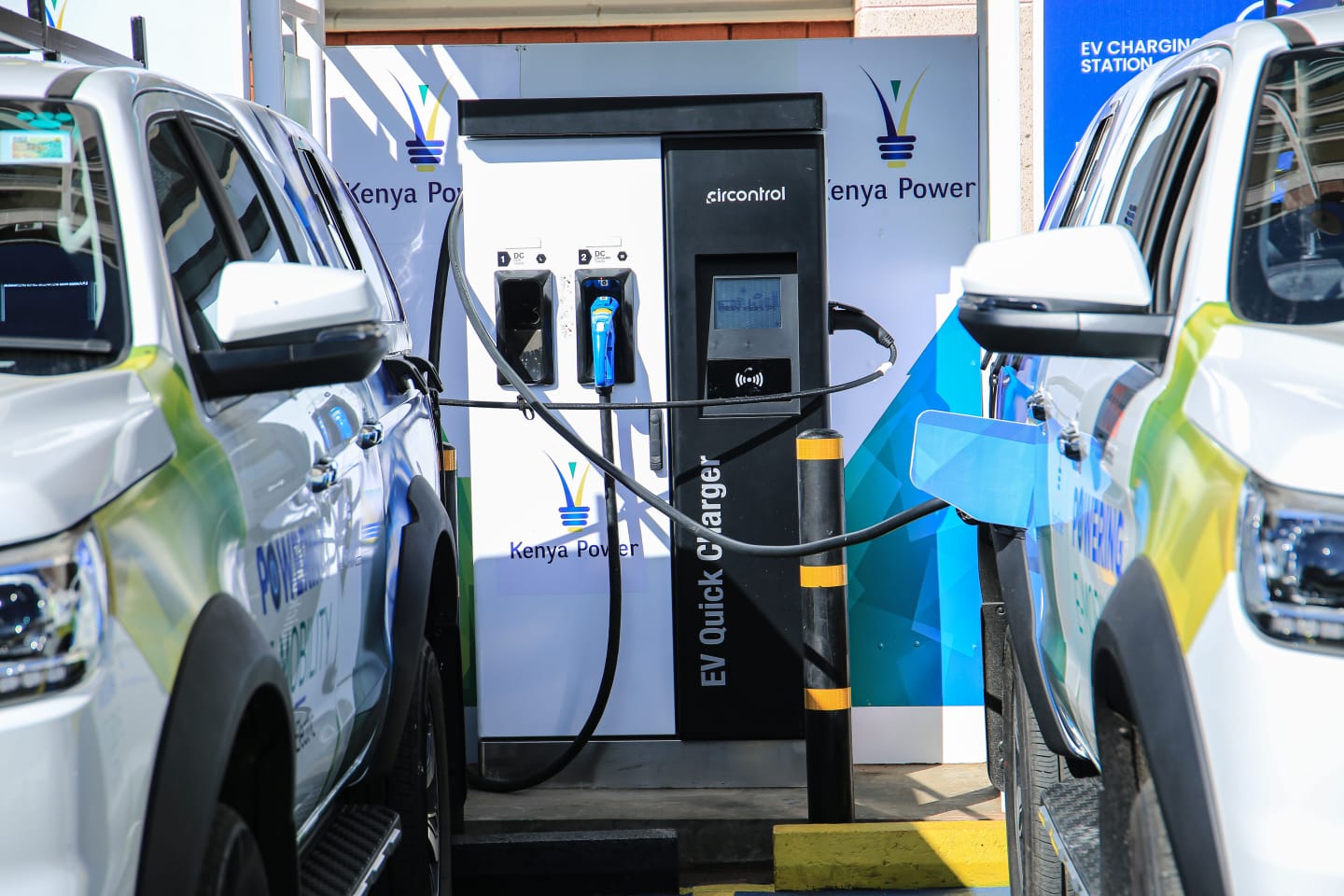

Kenya’s electric-vehicle market is moving beyond early adoption, and the expansion of EV charging infrastructure is becoming one of the most important parts of that transition.
Industry figures reported in 2026 put the number of electric vehicles on Kenyan roads at more than 35,000, compared with about 1,200 in 2023. At the same time, electricity consumption for EV charging has increased sharply. Kenya Power reported 8.43 million kWh of electricity consumption for electric mobility charging in 2025, up from 2.92 million kWh in 2024.
As more electric cars, motorcycles, buses and commercial vehicles enter the market, Kenyan drivers are asking an increasingly practical question:
The answer depends on the vehicle, your daily driving distance, where you park and whether you mainly drive within a city or travel between towns.
This guide explains the main EV charging solutions in Kenya in 2026, including home charging, public charging stations, DC fast charging, battery swapping, Kenya Power’s role and what buyers should consider before purchasing an electric vehicle.
EV Charging in Kenya at a Glance
| Charging solution | Best for | Main advantage |
|---|---|---|
| Home AC charger | Private EV owners | Convenient overnight charging |
| Public AC charger | Drivers with longer parking periods | Convenient at offices, malls and other destinations |
| DC fast charger | Long-distance and commercial drivers | Much faster charging |
| Battery swapping | Electric motorcycles | Very short downtime |
| Fleet charging | Businesses and institutions | Centralised charging for multiple vehicles |
For most private EV owners who have suitable parking, home charging is likely to be the most convenient option.
For drivers travelling long distances, however, access to reliable public fast-charging infrastructure becomes much more important.
1. Home EV Charging in Kenya
For an EV owner with access to electricity at home, installing a charger can significantly simplify daily charging.
Instead of looking for a charging station every time the battery gets low, you can plug in after arriving home and allow the vehicle to charge while it is parked overnight.
Advantages of home charging
- Convenient
- No queues at public charging stations
- Suitable for overnight charging
- Useful for daily commuting
- Reduces dependence on public chargers
However, installing an EV charger isn’t simply a matter of buying a wall-mounted unit and plugging it into an ordinary socket.
The home’s electrical system, charger rating, wiring, protection equipment and installation location all need to be considered.
A qualified electrical professional should assess the installation before a higher-powered charger is connected.
Who should consider a home charger?
Home charging makes particular sense for:
- Homeowners with dedicated parking
- Daily commuters
- Drivers with predictable travel patterns
- EV owners who can charge overnight
For apartment residents without dedicated parking or charging facilities, public charging may be more practical.
2. Kenya Power and EV Charging Infrastructure
Kenya Power is becoming an increasingly important player in Kenya’s electric-mobility ecosystem.
The utility has been expanding its involvement in e-mobility while supporting the development of charging infrastructure and introducing an electricity tariff for electric mobility.
In June 2026, Kenya Power reported cumulative revenue of KSh 382 million from EV charging between July 2023 and April 2026, with Nairobi contributing KSh 271.9 million.
The company also projected that revenue from the e-mobility sector could reach KSh 5.9 billion by 2030.
The importance of Kenya Power goes beyond the number of charging stations. As EV adoption increases, the electricity network will need to accommodate additional demand from private vehicles, motorcycles, buses and commercial fleets.
For consumers, this could eventually mean a larger and more structured EV charging ecosystem.
3. Public EV Charging Stations in Kenya
Public charging stations are particularly important for EV owners who:
- Live in apartments
- Do not have home charging
- Travel long distances
- Use their vehicle commercially
- Need a quick top-up during the day
Charging infrastructure is currently concentrated around major urban areas, particularly Nairobi, although the network is expanding.
Before relying on a particular station, however, check its current availability, operating status and connector compatibility.
A charging station being listed online does not necessarily mean that every charger will be available when you arrive.
4. EV Charging Stations in Nairobi
Nairobi is currently the centre of Kenya’s electric-mobility ecosystem, with a growing number of charging locations.
Examples of charging locations and networks include:
- Electric Vehicle Charging Station — Naivasha Road
- JazaCharge — Langata Road
- Ecotrify Charging Station — Hospital Road
- EVChaja — Limuru Road
- Roam Hub — Lusaka Road
- Roam Hub — Kayole
The charging landscape continues to change, with new stations and operators entering the market.
If you’re planning a trip specifically around charging, verify the station’s current operating status before setting off.
For long-distance journeys, having a backup charging option is also sensible.
5. Roam Charging Network
Roam has become one of the most visible names in Kenya’s electric-mobility sector, particularly in electric motorcycles and other light electric vehicles.
Its charging infrastructure includes Roam Hubs and Roam Points.
Roam describes its Hubs as locations offering services such as charging, battery rentals and support, while Roam Points provide charging infrastructure designed for compatible light electric vehicles.
The company has listed charging locations around Nairobi, including areas such as:
- Lusaka
- Waiyaki Way
- Karambee
- Suguta
- Outering
- Kayole
- Roysambu
- Adams Arcade
- Forest Road
For electric motorcycle riders, this type of network can be particularly valuable because charging infrastructure can be combined with battery-swapping and other support services.
6. Battery Swapping for Electric Motorcycles
Battery swapping is one of the most important alternatives to conventional EV charging in Kenya.
Instead of waiting for a battery to recharge, a rider removes a depleted battery and replaces it with a charged one.
The process can take significantly less time than conventional charging, depending on the swapping system and battery design.
This is particularly useful for electric boda boda riders and commercial motorcycle operators, where downtime directly affects income.
Benefits of battery swapping
- Minimal waiting time
- Useful for high-mileage riders
- Suitable for commercial operations
- Reduces charging downtime
- Allows riders to continue working while depleted batteries are recharged elsewhere
The main limitation is compatibility.
A battery-swapping system generally operates within a particular vehicle and battery ecosystem. Before buying an electric motorcycle, riders should therefore investigate where compatible batteries can be swapped.
7. BasiGo and Electric Bus Charging
BasiGo is another important participant in Kenya’s electric-mobility market.
The company operates electric buses and has developed charging infrastructure to support its public-transport operations in Nairobi.
This type of infrastructure is different from what a private car owner needs.
Electric buses require charging systems capable of supporting large batteries and predictable fleet operations. Vehicles can be charged at dedicated depots rather than relying entirely on public charging stations.
As electric public transport expands, fleet charging infrastructure is likely to become increasingly important.
8. KenGen’s EV Charging Projects
KenGen is also participating in the development of electric-mobility infrastructure.
In 2026, KenGen issued a tender covering the supply and installation of three EV charging systems at its locations in Nairobi, Naivasha and Kisumu.
The tender included different charging requirements and connector standards, including CCS2 and GB/T.
For EV buyers, this highlights an important point:
Your EV’s charging connector matters.
Not every charger works with every electric vehicle.
Before purchasing an EV or home charger, check the exact connector and charging standard supported by the vehicle.
9. AC Charging vs DC Fast Charging
Understanding the difference between AC and DC charging is essential when choosing an EV.
AC charging
AC charging is commonly used for:
- Homes
- Offices
- Hotels
- Apartments
- Shopping centres
- Overnight charging
It is generally better suited to situations where the vehicle will remain parked for several hours.
DC fast charging
DC fast charging is designed for situations where charging time matters more.
It is particularly useful for:
- Highway travel
- Commercial vehicles
- Ride-hailing vehicles
- Taxi operations
- Fleet vehicles
- Drivers without home charging
DC charging can replenish an EV considerably faster than ordinary AC charging, but the actual charging speed depends on both the charger and the vehicle.
10. How Much Does EV Charging Cost in Kenya?
There is no single nationwide price for charging an electric vehicle.
Your charging cost can depend on:
- Charging provider
- Electricity tariff
- Charger type
- Vehicle efficiency
- Battery capacity
- Amount of electricity consumed
- Location
- Provider’s pricing model
For this reason, comparing EV charging prices based only on the cost of one charging session can be misleading.
A better measure is:
Cost per kilometre
For example, an EV that consumes less electricity per kilometre can be cheaper to operate even if its battery is relatively large.
When comparing an EV with a petrol or diesel vehicle, look at the total operating cost, including:
Electricity + maintenance + tyres + insurance + financing + depreciation
rather than focusing only on the charging bill.
11. What Does It Cost to Install an EV Charger at Home?
The cost of home charging varies considerably because the charger is only one part of the installation.
Your total cost can depend on:
- Charger power
- Cable length
- Distance from the electrical panel
- Electrical capacity of the property
- Protection equipment
- Installation complexity
- Whether electrical upgrades are required
A basic installation can therefore be very different from installing a high-powered charger in a large home.
Before buying a charger, get an electrical assessment and a quotation from a qualified installer.
Avoid choosing a charger purely because it has the highest advertised power.
The vehicle itself may have a lower maximum charging rate.
12. EV Charging for Apartment Residents in Kenya
Apartment living presents a different challenge.
A homeowner with a private garage can install a dedicated charger relatively easily.
An apartment resident may have:
- No dedicated parking space
- Shared parking
- No electrical outlet near the parking area
- Building-management restrictions
- Limited electrical capacity
In this situation, public charging infrastructure may be more practical.
However, apartment owners’ associations and property managers could increasingly need to develop policies for EV charging as electric-car ownership grows.
For buyers living in apartments, check charging access before purchasing an EV.
13. Long-Distance EV Travel in Kenya
One of the biggest questions surrounding electric vehicles is whether they are practical for long-distance travel.
A driver travelling between Nairobi and another major town needs more than a large battery.
They need confidence that charging will be available along the route.
This is why Kenya’s future EV infrastructure will need strategically positioned charging stations along:
- Major highways
- High-traffic towns
- Urban centres
- Commercial corridors
- Tourist routes
Until the network becomes more extensive, long-distance EV drivers should plan routes around charging locations.
A sensible strategy is:
Charge at home → top up when necessary → use public fast charging on longer routes.
14. EV Charging and Power Reliability in Kenya
Electric vehicles depend on electricity, so Kenya’s power reliability is an important consideration.
For home charging, a short power interruption may simply delay charging.
For commercial fleets, however, repeated interruptions can have a much larger operational impact.
Fleet operators may therefore need to consider:
- Backup power
- Solar generation
- Battery storage
- Load management
- Charging schedules
For private EV owners, charging overnight or during periods of reliable electricity may reduce inconvenience.
15. Solar-Powered EV Charging
Kenya’s strong solar-energy potential also creates an opportunity for renewable EV charging.
A homeowner or business with solar panels can potentially use solar-generated electricity to support EV charging.
However, solar charging isn’t automatically cheaper.
The economics depend on:
- Solar-system size
- Battery storage
- EV charging demand
- Electricity tariff
- Installation cost
- Vehicle usage
For commercial operators and larger properties, solar-plus-storage could become increasingly attractive as EV fleets expand.
16. Check Your EV’s Charging Connector
Before buying an EV in Kenya, identify the charging connectors it supports.
Common standards include:
- CCS2
- GB/T
- Type 2
- Other manufacturer-specific configurations
Don’t assume that because two vehicles are electric they can use the same charging equipment.
If you import an EV, verify its charging standard before purchasing it.
This is especially important for used or grey-market vehicles where the model specification can differ between regions.
17. What Should You Consider Before Choosing an EV Charging Solution?
1. Where do you park?
If you have private parking with electricity, home charging may be the simplest option.
2. How far do you drive?
Someone travelling 30–50 km a day has different requirements from a commercial driver covering hundreds of kilometres.
3. What connector does your EV use?
Check the exact vehicle specification.
4. How quickly do you need to charge?
Overnight charging and five-minute top-ups are completely different use cases.
5. Is public charging available along your routes?
This is especially important for long-distance drivers.
6. How reliable is the charging network?
Check whether stations are operational and whether they support your vehicle.
7. What payment options are available?
Charging networks may use apps, mobile payments or other payment systems.
8. What will installation cost?
A charger may be affordable while the electrical installation is considerably more expensive.
Best EV Charging Solution for Different Kenyan Drivers
| User | Recommended charging solution |
|---|---|
| Homeowner | Home AC charger |
| Daily commuter | Home charging |
| Apartment resident | Public charging network |
| Long-distance driver | Home charging + DC fast charging |
| Electric boda boda rider | Battery swapping + fast charging |
| Ride-hailing driver | Home/public fast charging |
| Fleet operator | Dedicated fleet charging |
| Highway traveller | DC fast-charging network |
| Business with solar | Solar + managed EV charging |
What Is the Best EV Charging Solution in Kenya?
There isn’t one answer for every driver.
Best for most private EV owners: Home charging
If you have suitable parking, charging overnight at home is generally the most convenient approach.
Best for long-distance travel: DC fast charging
Drivers travelling between cities need access to reliable fast-charging infrastructure along major routes.
Best for electric motorcycles: Battery swapping
For high-mileage commercial riders, reducing downtime can be more important than maximum charging speed.
Best for fleets: Dedicated charging infrastructure
Companies operating multiple EVs need predictable charging schedules, sufficient electrical capacity and appropriate energy-management systems.
The Future of EV Charging in Kenya
Kenya’s EV market is entering a more important phase.
The question is no longer simply whether electric vehicles can operate in Kenya. The bigger challenge is building infrastructure that can support thousands of private vehicles, motorcycles, buses and commercial fleets.
Nairobi is currently at the centre of the charging ecosystem, but expansion beyond the capital will be critical.
More charging infrastructure will be needed along major highways and in regional towns if electric vehicles are to become practical for nationwide travel.
The growth in electricity consumption from electric mobility also demonstrates that charging demand is already increasing.
As the market develops, Kenya is likely to see greater investment in:
- Public DC fast chargers
- Home charging
- Fleet charging
- Battery swapping
- Solar-powered charging
- Charging-payment platforms
- Highway charging corridors
Final Verdict: Is EV Charging Practical in Kenya?
Yes, but the right charging strategy depends on how you use your vehicle.
For a Kenyan homeowner with private parking, a properly installed home AC charger is likely to provide the greatest convenience.
For drivers travelling long distances, DC fast-charging infrastructure will become increasingly important.
For electric boda boda riders and other high-mileage motorcycle users, battery swapping can reduce downtime significantly.
Companies and institutions such as Kenya Power, Roam, BasiGo and KenGen are helping shape Kenya’s emerging electric-mobility ecosystem, while charging operators continue to expand infrastructure.
The most important advice for anyone considering an EV in Kenya is simple:
Don’t buy the vehicle first and think about charging later.
Before purchasing, determine:
Where will I charge?
How much will charging cost?
Does the vehicle use a connector supported by the charging network I need?
What happens when I travel outside Nairobi?
Do I have reliable electricity at home or work?
For most Kenyan EV buyers, the ideal setup will eventually be a combination of home charging for everyday driving and public fast charging for longer journeys.
As Kenya’s electric-mobility market continues to expand, charging infrastructure could become one of the country’s most important technology and energy stories of the decade.
