
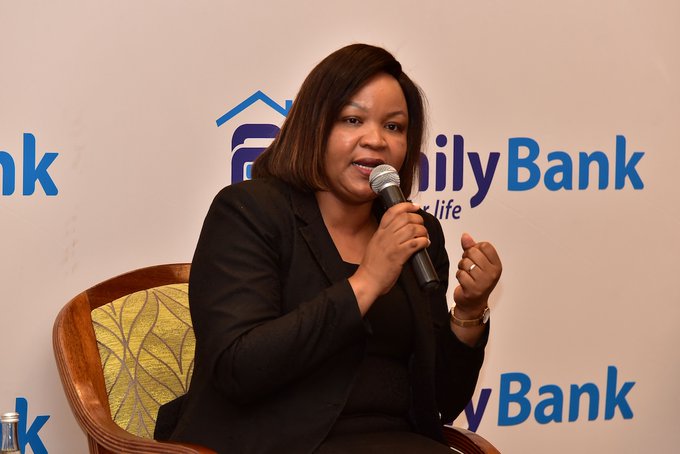

Family Bank has delivered a strong first set of half-year results as a listed company, with profit after tax rising 61.8% to KSh3.7 billion for the six months ended June 30, 2026.
The lender’s latest performance comes just weeks after its debut on the Nairobi Securities Exchange (NSE) in June, giving investors their first half-year look at Family Bank as a listed company.
Profit after tax increased from approximately KSh2.28 billion in the first half of 2025 to KSh3.7 billion, representing growth of nearly 62%.
The strong earnings were supported by higher interest income, increased lending, stronger deposits and expansion of the bank’s balance sheet.
Net Interest Income Jumps 41%
One of the biggest drivers of Family Bank’s performance was growth in net interest income, which increased by 40.7% to KSh9.79 billion, up from KSh6.95 billion in the same period last year.
Net interest income is particularly important for banks because it represents the difference between the interest they earn from loans and investments and the interest they pay on deposits and other funding.
For Family Bank, the sharp increase shows that its core lending business generated substantially more income during the period.
The bank’s interest income also increased by 25.9% to approximately KSh14.34 billion, while total operating income rose by 25.5% to about KSh12.09 billion, according to reported half-year figures.
Family Bank Disbursed KSh48.8 Billion in New Loans
Lending remained central to the bank’s growth strategy.
Family Bank issued approximately KSh48.8 billion in new loans during the six months, with retail and micro, small and medium-sized enterprise (MSME) customers receiving KSh35.6 billion and commercial customers receiving KSh15.2 billion.
However, the bank’s net loan book did not grow at the same pace as new loan disbursements.
Net loans increased by about 10.1% to KSh111.07 billion, according to financial reporting on the results.
This suggests that while the bank was actively lending, repayments and other balance-sheet movements also played a role in determining the final size of its loan book.
Customer Deposits Rise to KSh180.2 Billion
Family Bank also recorded strong growth in customer deposits.
Customer deposits increased by approximately 20% to KSh180.2 billion by the end of June 2026.
Deposit growth is important for a bank because deposits provide a major source of funding for lending and other investments.
Family Bank attributed the increase to its network optimisation strategy and continued engagement with customers.
The stronger deposit base also gives the lender greater capacity to support its lending activities while maintaining liquidity.
Total Assets Grow 24% to KSh238.9 Billion
Family Bank’s balance sheet expanded significantly during the first half of the year.
Total assets increased by 24% to KSh238.9 billion, with increased lending to the private sector helping drive the expansion.
The growth demonstrates that Family Bank entered its first period as an NSE-listed lender with a substantially larger balance sheet than a year earlier.
For investors, asset growth is worth watching alongside profitability because rapid expansion needs to be supported by strong asset quality, adequate capital and sustainable funding.
Costs Also Increased
Family Bank’s strong profit growth was not simply the result of higher income.
Operating expenses increased by approximately 11% to KSh7.4 billion, reflecting investments in technology, people and continued branch optimisation.
The fact that profit grew much faster than operating expenses helped the bank deliver stronger earnings.
This is an important part of the results because it suggests that Family Bank managed to grow its income while maintaining relatively disciplined cost growth.
Family Bank’s First Results After NSE Listing
The results are particularly significant because Family Bank became a listed company on the NSE in June 2026.
The bank listed at KSh18 per share through a listing by introduction. The transaction did not involve the issuance of new shares or a capital raise.
The listing gave Family Bank shareholders a formal market through which they could trade the bank’s shares.
It also brought the lender into a market where banking stocks have been among the strongest performers in 2026.
The NSE Banking Sector Index gained 25.27% during the first half of 2026, highlighting the strong performance of the banking sector before Family Bank’s half-year results were released.
What the Results Mean for Family Bank Investors
For investors, the KSh3.7 billion profit is an encouraging first performance as a listed entity.
The bank is demonstrating growth across several important areas:
- Profit after tax: KSh3.7 billion, up 61.8%
- Net interest income: KSh9.79 billion, up 40.7%
- Customer deposits: KSh180.2 billion, up about 20%
- Total assets: KSh238.9 billion, up 24%
- New loans issued: KSh48.8 billion
- Net loan book: KSh111.07 billion, up about 10.1%
These numbers point to a bank that is expanding while significantly improving its earnings.
However, investors should look beyond the headline profit number and continue monitoring loan quality, provisions, capital adequacy, liquidity, dividend policy and the share price.
Family Bank’s Growth Strategy
The performance comes as Family Bank continues implementing its 2025–2029 strategic plan.
The lender says the strategy is focused on supporting retail, MSME and commercial customers while strengthening its service offering and investing in technology, people and distribution.
This is particularly important because MSMEs remain a major part of Kenya’s economy and an important lending market for banks.
Family Bank’s ability to grow this segment without allowing credit risks to rise too quickly will be an important factor for investors to watch.
Stronger Profitability Comes With Risks
While the results are positive, strong loan growth does not automatically mean that a bank is becoming safer or more profitable in the long term.
Investors should continue watching asset quality and non-performing loans as Family Bank expands its lending.
The bank needs to balance growth with responsible credit management.
The ability to maintain strong profitability while controlling credit losses will be especially important if economic conditions change or borrowers face greater pressure.
Family Bank Enters a More Competitive Listed Banking Market
Family Bank’s NSE debut comes at a time when Kenya’s listed banking sector is attracting significant investor attention.
The sector accounted for approximately 41% of NSE market capitalisation in August 2026, according to market analysis, making banking the largest sector on the exchange by market value.
Major listed banks have also recorded significant share-price gains during 2026.
Family Bank therefore enters a competitive market where investors can compare its profitability, valuation, dividends, asset quality and growth against established listed lenders.
Its latest results give investors an early indication of how the bank is performing after joining the exchange.
What Family Bank Customers Should Take From the Results
The results are not only relevant to shareholders.
For customers, stronger profitability and balance-sheet growth can support continued investment in technology, branches and digital banking services.
Family Bank says its first-half performance reflects continued investment in its people, technology and distribution network.
Customers should nevertheless continue comparing products such as savings accounts, loans, digital banking services and transaction fees before making financial decisions.
The Bigger Story Behind Family Bank’s KSh3.7 Billion Profit
Family Bank’s latest results tell a broader story about Kenya’s banking industry.
The lender is growing its balance sheet, attracting more deposits, increasing lending and generating significantly higher interest income.
At the same time, its entry into the NSE gives retail and institutional investors a new listed banking stock to track.
The combination of strong earnings growth and a recent stock-market listing makes Family Bank one of the more closely watched banking counters on the NSE.
Final Takeaway
Family Bank’s first half-year results as an NSE-listed company have started on a strong note.
Profit after tax rose 61.8% to KSh3.7 billion, while net interest income increased 40.7% to KSh9.79 billion. Customer deposits climbed to KSh180.2 billion and total assets reached KSh238.9 billion.
The results show that Family Bank is not simply benefiting from its new listing—it is entering the public market with strong earnings momentum.
The next challenge will be maintaining that growth while controlling costs, managing credit risk and delivering sustainable returns to shareholders.
For investors watching Kenya’s banking sector, Family Bank’s performance over the next few reporting periods will be crucial in determining whether its strong H1 2026 results mark the beginning of a longer growth story.
