
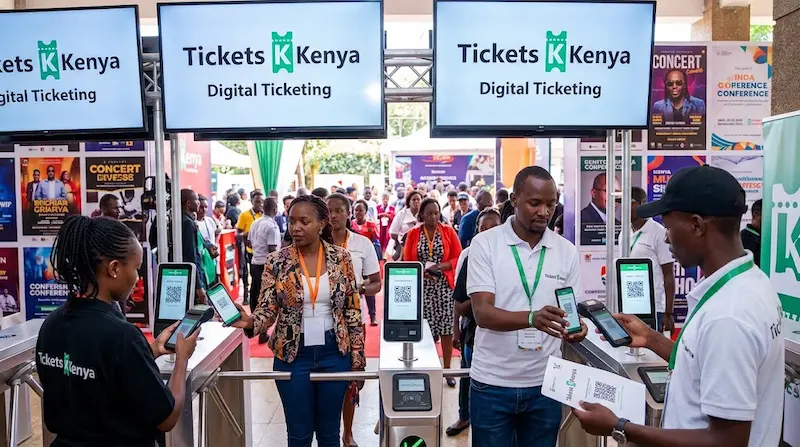

Buying a ticket to a Kenyan event is becoming increasingly digital.
Instead of visiting a physical ticket outlet, paying with cash and carrying a printed ticket, customers can now discover events online, pay digitally and receive their tickets directly on their phones.
This shift is part of a broader transformation taking place across Kenya’s digital economy.
One platform participating in this change is Tickets Kenya, an online event-ticketing and registration service developed by Dimetech Group Ltd.
The platform brings several parts of the event-ticketing process into one digital environment, including event creation, ticket sales, payments, digital ticket delivery, QR-code check-in and event reporting.
The technology behind the platform provides an interesting look at how digital tools are changing the way events can be organized and attended in Kenya.
How Tickets Kenya Is Using Technology
Traditional ticketing can involve several separate processes.
An organizer may have to advertise an event, collect payments, record customers, issue tickets, maintain attendance lists and verify people at the entrance.
Digital ticketing can connect many of these activities.
Tickets Kenya provides organizers with tools to create events, configure ticket types and prices, sell tickets online and manage event information through a digital dashboard.
The platform also provides reporting tools covering areas such as ticket sales, attendees and check-ins.
This means the ticket is no longer simply a piece of paper proving that someone paid.
It becomes part of a digital system connecting the customer, payment, ticket and event entrance.
1. Creating Events Online
The first stage of digital ticketing is event creation.
Instead of relying entirely on printed posters, spreadsheets and manual registration lists, organizers can enter event information into an online platform.
Event organizers can add information such as the event name, date, location, ticket categories and prices.
Once the event is configured, tickets can be made available to customers online.
Consider a technology workshop in Nairobi.
An organizer could create separate ticket categories for students, regular attendees and VIP participants. Each category can have its own price and availability.
This gives the organizer a central digital location for managing the event.
2. Digital Payments Make Ticket Purchases Easier
Payment is one of the most important parts of online ticketing.
The platform supports digital payment options including mobile money and Visa, with payment processing provided through Paystack.
This fits naturally into Kenya’s increasingly digital payment environment.
A customer attending a business conference in Nairobi, for example, can discover the event online and complete the ticket purchase without travelling to a physical sales location.
The result is a shorter purchasing journey:
Find the event → select a ticket → make payment → receive the ticket.
For organizers, digital payments can also reduce the amount of manual payment reconciliation involved in selling tickets.
However, payment reliability still depends on factors such as network connectivity, payment providers and the customer’s bank or mobile-money service.
3. QR Codes Turn Tickets Into Digital Access Passes
QR codes are another important part of the technology.
Digital tickets generated through the platform contain QR codes that can be scanned by event staff at the entrance.
Instead of manually searching through a printed list of hundreds of names, staff can scan an attendee’s ticket and verify the entry digitally.
Imagine a Nairobi conference with 500 registered attendees arriving within an hour.
A manual process could require staff to search for names and confirm registration individually.
QR-based check-in can make that process more structured.
The attendee displays the ticket on their phone.
The event staff member scans the QR code.
The ticket is verified.
The attendee is checked in.
The process illustrates how a simple technology such as a QR code can connect a customer’s purchase with physical access to an event.
QR codes do not, however, automatically eliminate ticket fraud. Security also depends on how tickets are generated, validated, duplicated, transferred and checked at the venue.
4. Tickets Can Be Delivered Through WhatsApp and Email
The shift from physical to digital tickets also changes how customers receive their tickets.
Tickets can be delivered through channels such as WhatsApp and email, allowing attendees to keep their tickets on their smartphones.
This is particularly relevant in Kenya, where smartphones and messaging applications are deeply integrated into everyday communication.
For example, someone travelling from Thika to Nairobi for a business event could purchase a ticket online and receive the digital ticket before leaving home.
There is no requirement to collect a physical ticket simply to prove that payment was made.
The smartphone effectively becomes the ticket holder.
5. Real-Time Data Gives Organizers More Visibility
Another important technology layer is event data.
The platform provides organizers with reporting tools covering ticket sales, attendees, check-ins and other event information.
This can give organizers a clearer picture of what is happening before and during an event.
For example, an organizer could monitor:
- Number of tickets sold
- Different ticket categories
- Registered attendees
- Check-ins
- Remaining tickets
- Raffle participation
Previously, an organizer might have needed to combine information from payment messages, spreadsheets and physical attendance lists.
A centralized digital dashboard can reduce some of that administrative work.
The value of this data extends beyond convenience.
It can help organizers understand attendance patterns and evaluate how effectively an event was managed.
6. Event Management Through a Mobile Browser
Event organizers are not always sitting behind a computer.
They may be visiting venues, meeting sponsors, coordinating staff or promoting an event.
Tickets Kenya’s platform can be accessed through a mobile browser, allowing organizers to manage and track events from a smartphone.
For a small event organizer running a workshop in Nairobi, this could be useful when checking ticket sales or monitoring event information while away from a laptop.
Mobile access also reflects a broader reality of Kenya’s technology market: digital services increasingly need to work well on smartphones.
7. Digital Raffles Add Another Layer
The platform also includes digital raffle functionality.
Organizers can create raffles as part of an event and manage raffle participation digitally.
This demonstrates how event platforms are moving beyond simple ticket sales.
The same digital infrastructure can potentially support additional event activities, depending on how an organizer structures the event.
The broader trend is clear: modern event platforms are increasingly becoming event-management systems rather than simply online ticket shops.
What Does This Mean for Kenyan Event Organizers?
Digital ticketing can be useful for events of very different sizes.
A small Nairobi workshop
A trainer hosting a 50-person workshop could create the event online, sell tickets digitally and use QR codes to manage entry.
A corporate conference
A company organizing a business conference could create different ticket categories, monitor sales and provide attendees with digital tickets.
A large entertainment event
A larger entertainment event could use online ticketing and QR-code check-in to manage large numbers of attendees while monitoring sales and entry activity.
The technology does not remove the need for event staff.
Instead, it can change the tasks staff perform.
Rather than spending significant time searching through paper lists, staff can use digital tools to verify tickets and assist attendees.
Digital Ticketing Still Has Challenges
Moving an event online does not eliminate every operational problem.
It creates new technology requirements that organizers need to consider.
Internet connectivity
Digital ticket verification can be affected by poor connectivity depending on how the platform and venue’s systems are configured.
Large events therefore need contingency plans.
Smartphone problems
An attendee may have a dead battery, damaged phone or difficulty displaying a ticket.
Organizers need procedures for handling such situations.
Payment failures
A failed payment may result from network problems, a payment gateway, bank systems or mobile-money services.
Customers should therefore confirm whether a transaction was completed before attempting to purchase another ticket.
Data protection
Digital ticketing involves customer information.
Organizers and technology providers need to handle personal data responsibly and comply with applicable Kenyan data-protection requirements.
Cybersecurity
As more event activity moves online, protecting accounts, payment processes and customer information becomes increasingly important.
What Happens When You Buy a Digital Event Ticket?
The entire process can be broken down into several stages.
1. Event discovery
The customer finds an event online.
2. Ticket selection
The customer selects the preferred ticket type and quantity.
3. Digital payment
Payment is completed using an available payment method.
4. Digital delivery
The customer receives the ticket through a supported digital channel such as WhatsApp or email.
5. Arrival
The attendee arrives at the venue and presents the ticket.
6. QR scanning
Event staff scan the QR code.
7. Check-in
The attendee’s entry is recorded digitally.
8. Reporting
The organizer can monitor ticket sales and attendance through available reporting tools.
What looks like a simple ticket purchase is therefore connected to several different technologies.
Why This Matters to Kenya’s Digital Economy
Digital ticketing may appear to be a small part of the technology sector, but it reflects a much bigger change.
Businesses across Kenya are increasingly moving individual processes online.
Customers can discover products online, pay digitally, receive confirmations electronically and interact with services through smartphones.
The same pattern appears in e-commerce, financial services, transport, accommodation and event management.
Kenya’s established mobile-money ecosystem is particularly relevant.
Digital payments have become an important part of how consumers and businesses transact, creating an environment where online ticketing can become more practical.
For event organizers, the opportunity is not simply to sell tickets online.
It is to connect sales, payments, ticket delivery, access control and reporting within a digital workflow.
The Technology Behind a Modern Event Is Becoming More Connected
Tickets Kenya provides an example of how several relatively simple technologies can work together.
Online event management handles event creation.
Digital payments handle transactions.
WhatsApp and email handle ticket delivery.
QR codes support entry verification.
Dashboards and reporting provide organizers with event information.
Individually, none of these technologies is particularly new.
The important development is how they are combined.
A customer can discover an event on a smartphone, purchase a ticket, receive it digitally and use the same phone to gain entry.
At the other end, an organizer can create the event, monitor sales and track attendance from a digital platform.
That is the bigger technology story behind digital ticketing.
What Could Come Next for Event Technology in Kenya?
The future of event technology could involve increasingly connected systems.
Ticketing platforms could become more closely integrated with event marketing, customer communication, venue management, analytics and other digital services.
For consumers, this could mean fewer manual steps between discovering an event and attending it.
For organizers, better data could provide more information about how people discover events, purchase tickets and arrive at venues.
However, convenience will need to be balanced with privacy, security, accessibility and reliability.
The success of digital event technology will ultimately depend not only on the features offered by platforms but also on how well those technologies work in real-world Kenyan conditions.
Frequently Asked Questions
What is Tickets Kenya?
Tickets Kenya is a digital event-ticketing and registration platform developed by Dimetech Group Ltd. It provides tools for event creation, ticket sales, digital ticket delivery and event management.
How can customers buy tickets?
Customers can select an event and ticket quantity before completing payment using available digital payment methods, including mobile money and Visa.
How are digital tickets delivered?
Tickets can be delivered through digital channels including WhatsApp and email.
How does QR-code ticketing work?
A QR code is included on the digital ticket and can be scanned by event staff at the venue to support ticket verification and check-in.
Can event organizers monitor ticket sales?
Yes. The platform provides event-management and reporting tools that can give organizers information about ticket sales, attendees and check-ins.
Can organizers manage events from a phone?
The platform can be accessed through a mobile browser, allowing organizers to manage and monitor events without being tied to a desktop computer.
Does a QR code completely prevent ticket fraud?
No. QR-code technology can support ticket verification, but effective event security also depends on ticket-generation controls, validation procedures, staff training and other security measures.
Is digital ticketing useful for small events?
It can be. Workshops, networking events, conferences and other small gatherings can use digital ticketing to simplify registration, payment and entry management.
Related TechDrivers Articles
If you are interested in Kenya’s wider technology and digital-business ecosystem, these TechDrivers stories provide additional context:
- How AI Is Becoming a Digital Teammate at Work — how businesses are incorporating AI into everyday workflows.
- How AI Is Transforming Digital Tourism in Kenya — how technology is changing the tourism experience.
- The Kenyan Refurbished Electronics Economy — how technology markets are developing around used devices.
- What Happens to Your Data After You Delete an App? — a look at what happens to personal information in digital services.
Conclusion
Digital ticketing is changing more than the way Kenyans buy event tickets.
It is changing how organizers can create events, collect payments, distribute tickets, verify attendees and monitor what happens at the venue.
Tickets Kenya brings several of these functions together through online event management, digital payments, WhatsApp and email delivery, QR-code check-in and event reporting.
The larger lesson is about the digitisation of everyday business processes.
An event ticket that once existed primarily as a piece of paper can now become part of a connected digital system linking payment, registration, access and data.
For Kenya’s growing digital economy, that represents another example of technology moving from the background into everyday business and consumer experiences.
Editorial note: This article examines the technology and functionality associated with Tickets Kenya based on publicly available platform information. Features, payment options and platform capabilities can change, so organizers and attendees should confirm current functionality before relying on a particular feature.
