
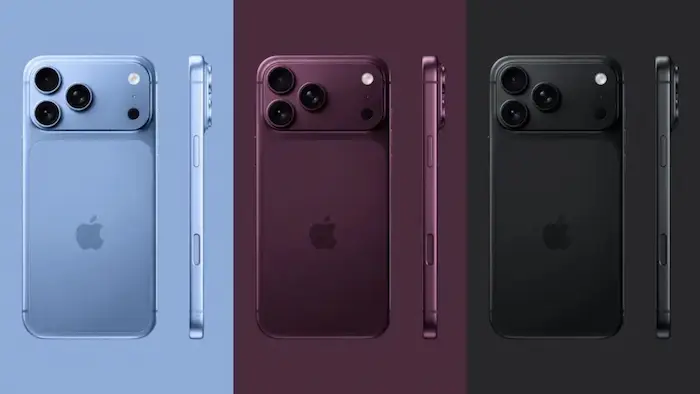

Apple may be about to break one of the biggest traditions in the iPhone calendar.
For more than a decade, Apple’s main iPhone models have generally arrived together around September. But multiple reports now suggest that the standard iPhone 18 could be held back until 2027, while Apple’s more expensive models launch first.
That would mean the iPhone 18 Pro and iPhone 18 Pro Max are expected to arrive in Apple’s September 2026 cycle, potentially alongside the company’s long-rumoured first foldable iPhone.
The standard iPhone 18 and iPhone 18e, meanwhile, are reportedly being pushed to spring 2027.
There is an important distinction, however:
Apple has not confirmed that the standard iPhone 18 is delayed.
The company’s September 9, 2026 event is confirmed, but the exact iPhone lineup remains officially undisclosed.
So here’s what is known, what is rumoured and what the reported change could mean for Kenyan buyers.
What Is Confirmed?
The first thing TechDrivers readers need to know is the difference between an Apple announcement and reporting from Apple’s supply chain.
Confirmed by Apple
Apple has officially announced a major product event for September 9, 2026.
Not confirmed by Apple
Apple has not officially confirmed:
- The name “iPhone 18”
- The iPhone 18 Pro specifications
- A foldable iPhone
- A spring 2027 standard iPhone 18
- Kenyan pricing
- Kenyan availability
Everything beyond the September event should therefore be treated according to its source and confidence level.
What Are Reports Saying About the iPhone 18?
The strongest current reporting points to a split iPhone launch strategy.
Instead of releasing the entire iPhone 18 family together, Apple is reportedly planning two launch windows.
Fall 2026
Expected:
- iPhone 18 Pro
- iPhone 18 Pro Max
- Apple’s first foldable iPhone
Spring 2027
Reportedly:
- iPhone 18
- iPhone 18e
- Possibly iPhone Air 2
MacRumors currently describes the standard iPhone 18 as a spring 2027 product, while noting that the information remains based on reports and rumours rather than an Apple announcement.
A June report also pointed to comments from Largan Precision, an Apple camera-component supplier, about a major U.S. customer postponing a product launch to the first quarter of 2027. The supplier did not identify Apple or the product, so this is supporting evidence rather than confirmation.
Why Would Apple Delay the Standard iPhone 18?
There isn’t one officially confirmed explanation.
But several theories have emerged.
1. Apple Could Be Expanding the iPhone Lineup
Apple’s smartphone portfolio has become considerably more complicated.
The company now has multiple tiers, including:
- Standard iPhone
- Pro
- Pro Max
- iPhone e models
- iPhone Air
- Potentially a foldable model
Launching all of them at once could make Apple’s September event overcrowded.
A staggered release would allow Apple to give each product more attention.
2. The Foldable iPhone Could Become the Main Attraction
Apple is reportedly preparing its first foldable iPhone for the 2026 launch cycle.
Reuters reports that Apple’s September event is expected to feature the company’s first foldable iPhone alongside its latest premium models.
If the foldable becomes Apple’s biggest new product, launching a standard iPhone 18 at the same time could potentially dilute the attention.
A separate spring launch would give the standard model its own marketing window.
3. Manufacturing Could Be a Factor
A staggered launch could also help Apple manage production.
Apple’s supply chain involves enormous numbers of components and manufacturing partners.
Spacing launches across different periods could potentially make production and inventory management easier.
However, Apple has not publicly confirmed this as the reason for delaying the standard model.
So TechDrivers should present it as an industry explanation, not an established fact.
What Could the Standard iPhone 18 Look Like?
This is where the article needs particularly careful wording.
According to current reports, the standard iPhone 18 could retain a design broadly similar to the current generation rather than receiving a dramatic external redesign. MacRumors currently reports a possible 6.3-inch display for the standard iPhone 18.
But these specifications are rumoured.
They should not be presented as final specifications.
Reported features include:
- Around 6.3-inch display
- Next-generation A20 chip
- More RAM than the current generation
- Potentially improved battery efficiency
- Updated connectivity
- Continued emphasis on Apple Intelligence
Again, these remain subject to change.
The A20 Chip Could Be One of the Biggest Upgrades
One of the more widely reported changes is Apple’s move toward the A20 generation of chips.
Current reports suggest Apple could use a new 2nm manufacturing process for the A20 family.
If that happens, the main benefits could include:
- Higher performance
- Better power efficiency
- Improved AI processing
- Potentially longer battery life
But don’t interpret “2nm” as automatically meaning the phone will be twice as fast.
Chip performance depends on the architecture, CPU/GPU design, software optimisation and thermal management.
What About RAM?
This is another area where rumours conflict.
Reports have suggested the standard iPhone 18 could receive either 9GB or 12GB of RAM, depending on which supply-chain analyst or report you follow.
That means TechDrivers should not publish a definitive RAM specification yet.
The correct wording is:
“The iPhone 18 is rumoured to receive more RAM, with reports pointing to configurations ranging from 9GB to 12GB.”
That’s much safer than:
“The iPhone 18 will have 12GB RAM.”
What Does the Delay Mean for the iPhone 17?
This is where the story becomes particularly interesting for Kenyan buyers.
If the standard iPhone 18 really moves to spring 2027, the iPhone 17 could remain Apple’s current standard-generation phone for considerably longer than normal.
Reports suggest the iPhone 17 may not receive its usual immediate successor in September 2026.
That could affect Kenyan prices.
Normally, a new iPhone generation puts pressure on older models.
But if there is no standard iPhone 18 immediately replacing the iPhone 17, sellers could have less reason to dramatically reduce the iPhone 17.
What Does This Mean for Kenyan Buyers?
This is arguably the most important part of the story for TechDrivers.
Kenyan consumers don’t necessarily buy new iPhones directly from Apple.
Many purchase through:
- Authorised retailers
- Independent smartphone shops
- Online sellers
- Importers
- Grey-market distributors
- Used-phone dealers
That means the global release schedule can affect Kenyan prices differently.
If You Want an iPhone 17
You may not need to wait for September expecting a huge price drop.
If the standard iPhone 18 isn’t arriving until 2027, the normal annual price-reset effect could be weaker.
For someone already looking for an iPhone 17, this could actually make buying sooner more reasonable if you find a good price from a reputable seller.
If You Want the Latest Standard iPhone
Then patience could be important.
If the reports are correct, you may have to wait until early 2027 for the standard iPhone 18.
That means a Kenyan buyer waiting for the non-Pro iPhone 18 should not assume that September 2026 is the right time to buy.
The reported schedule is:
| Model | Reported timing |
|---|---|
| iPhone 18 Pro | September 2026 |
| iPhone 18 Pro Max | September 2026 |
| Foldable iPhone | September 2026 |
| iPhone 18 | Spring 2027 |
| iPhone 18e | Spring 2027 |
| iPhone Air 2 | Possibly spring 2027 |
Important: this is a reported/rumoured timeline, not Apple’s confirmed release calendar.
Should Kenyans Buy the iPhone 17 or Wait?
It depends on your budget.
Buy the iPhone 17 if:
- You need a phone now
- You find a good deal
- You don’t need the latest chip
- You want to avoid potentially higher launch prices
- You don’t want to wait until 2027
Wait for the iPhone 18 if:
- You specifically want the newest standard model
- You can wait several months
- You care about the latest processor
- You want longer remaining software support
- You expect the new model to bring meaningful improvements
Consider the iPhone 18 Pro if:
- You want Apple’s newest technology immediately
- You have a higher budget
- You care about cameras and performance
- You don’t mind paying substantially more
What Could Happen to iPhone Prices in Kenya?
This is difficult to predict because Kenyan retail prices are affected by more than Apple’s launch price.
They can also depend on:
- Kenya shilling exchange rates
- Import costs
- Taxes and duties
- Shipping
- Retailer margins
- Global supply
- Storage capacity
- Grey-market availability
Therefore, TechDrivers should not publish a speculative KSh price for the iPhone 18 as though it were official.
Instead, once Apple announces the phone, calculate the Kenyan price from verified local retailers.
What About the iPhone 18 Pro?
The Pro models are expected to be Apple’s main iPhone launch in September.
Current reporting points toward:
iPhone 18 Pro + iPhone 18 Pro Max + foldable iPhone
rather than the complete standard lineup.
The Pro models are also expected to receive more substantial hardware changes than the standard iPhone 18.
But again, until Apple announces them, specifications should remain labelled rumoured.
Apple’s First Foldable iPhone Changes Everything
The reported launch of Apple’s first foldable iPhone is arguably more significant than the delayed standard model.
Reuters reports that Apple’s September event is expected to introduce the company’s first foldable iPhone.
If that happens, Apple would finally enter a smartphone category already dominated by companies such as Samsung.
For Kenya, this could create a new premium segment.
However, pricing is likely to be a major barrier.
A foldable iPhone is unlikely to compete with mainstream Android smartphones on affordability.
Will the iPhone 18 Be More Expensive in Kenya?
It’s too early to say.
There are reports of potential higher component costs affecting Apple’s upcoming devices, but the final retail price has not been confirmed.
For Kenyan buyers, the final price could be influenced by both Apple’s global pricing and local exchange/import conditions.
So avoid headlines such as:
“iPhone 18 will cost KSh 200,000 in Kenya.”
unless the figure comes from an actual confirmed retailer or Apple pricing.
What Kenyan Buyers Should Watch Before Buying
If you’re considering an iPhone purchase around the September launch, watch these five things.
1. Apple’s official announcement
This is the most important source.
2. Actual global pricing
Don’t rely on leaks.
3. Kenyan retailer pricing
Compare several reputable sellers.
4. Warranty
A cheap imported iPhone isn’t necessarily a good deal if warranty support is unclear.
5. Model and region
Check the exact model number and regional configuration before buying.
This is particularly important with imported iPhones.
Rumour vs Confirmed: iPhone 18 at a Glance
| Claim | Status |
|---|---|
| Apple September 9 event | 🟢 Confirmed |
| iPhone 18 Pro launches in September | 🟡 Reported |
| Standard iPhone 18 delayed to 2027 | 🟡 Strongly reported, not confirmed |
| iPhone 18e delayed | 🟡 Reported |
| Foldable iPhone launches in September | 🟡 Widely reported |
| A20 chip | 🟡 Rumoured |
| 2nm process | 🟡 Rumoured |
| 9GB/12GB RAM | 🟡 Rumoured / conflicting reports |
| Kenya price | 🔴 Not confirmed |
| Kenya launch date | 🔴 Not confirmed |
This table is exactly the kind of transparency I would keep in the final TechDrivers version.
The Bigger Story: Apple May Be Changing the iPhone Calendar
The reported delay isn’t just about one phone.
It could represent a fundamental change to Apple’s product strategy.
Instead of:
All major iPhones → September
Apple could move toward:
Premium iPhones → September
Standard iPhones → Spring
That would give Apple multiple major iPhone moments throughout the year.
It could also help Apple market each product more clearly instead of asking consumers to compare a huge number of models during one September event.
But until Apple confirms the strategy, it remains a reported plan rather than an established new tradition.
Final Verdict
The reported iPhone 18 delay is significant, but the headline needs to be handled carefully.
Apple has confirmed its September 9, 2026 event. It has not confirmed that the standard iPhone 18 will be absent.
However, the evidence for a split launch has become stronger, with multiple reports pointing to the standard iPhone 18 arriving in spring 2027, while the Pro models and Apple’s reported foldable iPhone appear first.
For Kenyan consumers, the biggest consequence could be the iPhone 17.
If you’re hoping the September 2026 launch will immediately push down the price of the standard iPhone 17, that may not happen in the usual way.
If you need a phone now, a well-priced iPhone 17 could still make sense.
But if you’re specifically waiting for the standard iPhone 18, the current reports suggest 2027—not September 2026—is the date to watch.
Until Apple speaks, however, treat every specification, price and release date as a rumour unless officially confirmed.
