
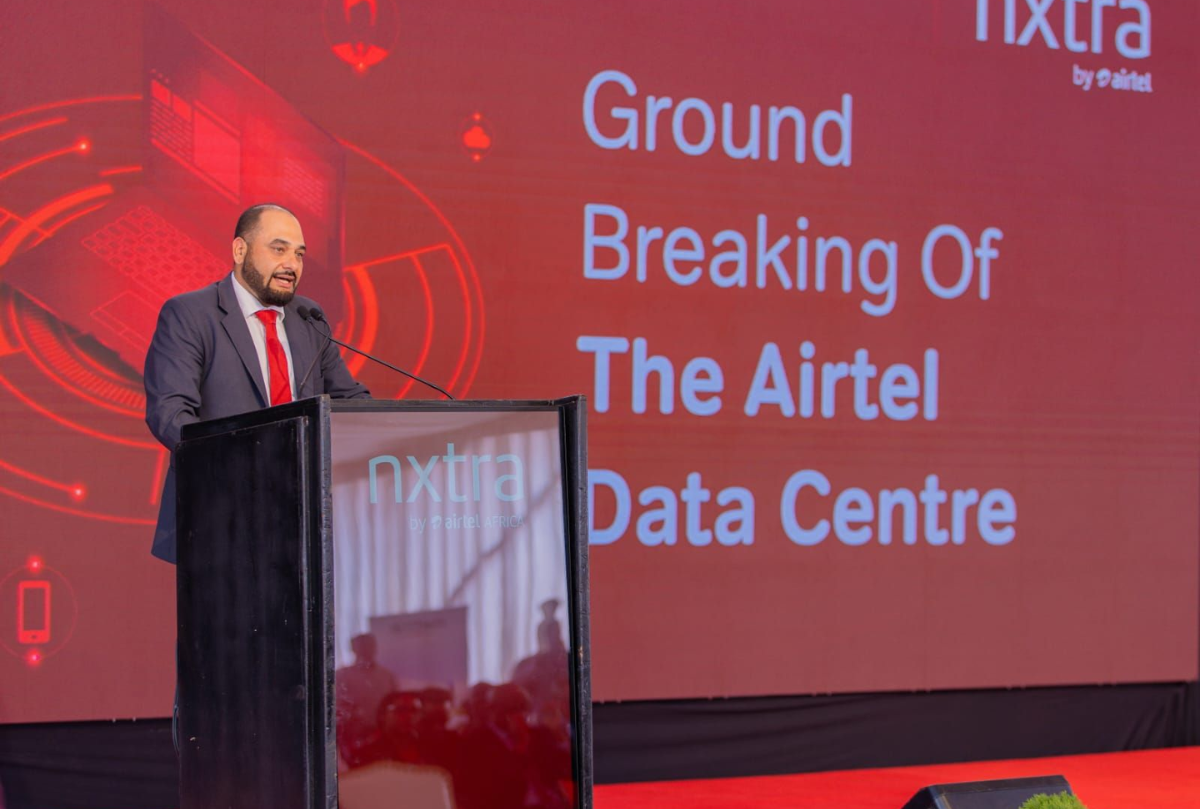

Airtel Africa is building a $150 million data centre at Tatu City, near Nairobi, in a major investment that could reshape Kenya’s cloud computing, artificial intelligence and digital infrastructure landscape.
The facility, being developed by Nxtra by Airtel Africa, is planned to have a power capacity of 44 megawatts (MW) and is expected to be commissioned in the first quarter of 2027.
Airtel Africa describes the project as the largest data centre infrastructure of its kind in East Africa. Kenya’s Ministry of Information, Communications and the Digital Economy says the facility is designed to meet growing infrastructure requirements for cloud and artificial intelligence services.
The investment comes at a time when Kenya is experiencing growing demand for cloud services, artificial intelligence, online applications, enterprise connectivity and data storage.
But what exactly does a large data centre mean for ordinary internet users, businesses and Kenya’s technology sector?
What Is Airtel’s Nxtra Data Centre?
The facility is being developed by Nxtra by Airtel Africa, Airtel Africa’s data-centre business.
Construction began at Tatu City in September 2025. The company says the Kenyan facility will have a planned capacity of 44 MW and is expected to be commissioned during the first quarter of 2027.
The project is part of Nxtra’s wider plan to build a network of secure and scalable data centres across Africa.
Nxtra says its facilities are intended to serve:
- Large enterprises
- Multinational companies
- Cloud providers
- Startups
- Small and medium-sized businesses
- Governments
- Other organizations requiring secure computing infrastructure
The company describes its African data-centre strategy as a way of bringing infrastructure closer to customers and supporting the continent’s growing digital economy.
Why Does Kenya Need More Data Centres?
Every time someone sends a message, watches a video, uses cloud storage, makes an online payment or accesses an online service, data has to be processed and stored somewhere.
Modern businesses increasingly rely on cloud infrastructure instead of maintaining all their servers themselves.
Banks, hospitals, retailers, government agencies, technology companies and startups can all use data centres to host applications, databases and digital services.
At the same time, artificial intelligence is creating a new level of demand.
AI applications require significant computing resources for:
- Training models
- Running AI models
- Processing large datasets
- Generating content
- Analysing information
- Automating business processes
That means countries that want to become competitive digital economies need reliable computing infrastructure.
Kenya’s government has identified the Airtel/Nxtra facility as strategically important for cloud and AI services and for positioning Kenya as a technology hub.
How Big Is the $150 Million Project?
The investment announced for the initial phases of the Kenyan project is approximately US$150 million.
The facility is planned with 44 MW of capacity, making it a major piece of digital infrastructure for the region. Reports on the groundbreaking described the initial investment as roughly KSh 19 billion, depending on the exchange rate used at the time.
The size of a data centre is not measured only by the physical building.
Power capacity is particularly important because servers, networking equipment and cooling systems require significant amounts of electricity.
A 44 MW facility therefore represents substantial computing and infrastructure potential.
When Will the Data Centre Be Ready?
According to Airtel Africa, the Kenyan data centre is expected to be commissioned in the first quarter of 2027.
This means the facility is not yet operational as of August 2026.
That distinction is important.
The project is currently an infrastructure investment under development, meaning claims about faster internet or improved AI services should be viewed as potential benefits, rather than benefits that consumers are already receiving.
Once operational, however, the facility could provide additional capacity for businesses and digital service providers.
What Does It Mean for Cloud Computing?
One of the biggest potential benefits is the growth of cloud computing in Kenya.
Cloud computing allows companies to access computing resources over the internet rather than purchasing and maintaining all their own hardware.
Businesses can use cloud infrastructure for:
- Website hosting
- Databases
- Business applications
- Backup systems
- Data analytics
- Software development
- Artificial intelligence
- Disaster recovery
A large local data centre gives businesses another infrastructure option within the region.
Nxtra says its data centres will provide colocation, interconnectivity, migration services, customized infrastructure and customer support.
For Kenyan businesses, this could make it easier to deploy digital services closer to their customers.
Could It Make Internet Services Faster?
This is one area where expectations need to be managed.
A data centre does not automatically make every Kenyan’s mobile internet faster.
Your internet speed still depends on factors such as:
- Your network provider
- Mobile tower capacity
- Fibre connectivity
- Network congestion
- Your device
- Your location
- International connectivity
- The service you’re accessing
However, a large local data centre can potentially improve the performance of services hosted within or connected to the facility.
When applications and content are hosted closer to users, the distance data needs to travel can be reduced.
That can potentially improve latency and responsiveness for certain applications.
For example, a Kenyan business hosting its application locally could potentially provide a better experience to Kenyan users than relying entirely on infrastructure located overseas.
What Does It Mean for Artificial Intelligence?
AI is arguably one of the most important reasons this investment matters.
Modern AI systems require substantial computing infrastructure.
A data centre designed to support AI workloads can provide the physical environment needed for high-performance computing, networking, storage and cooling.
Nxtra says the Kenyan facility is intended to support cloud workloads and artificial intelligence.
This could create opportunities for:
AI startups
Kenyan startups developing AI products could potentially access more local infrastructure for hosting applications and processing data.
Businesses
Companies could deploy AI-powered services without necessarily relying entirely on infrastructure outside Africa.
Government
Public-sector organizations could potentially use local infrastructure for digital services and data-intensive applications.
Developers
Software developers could benefit from additional local infrastructure for building and deploying applications.
Could Kenya Become an AI Hub?
The data centre alone will not make Kenya an AI hub.
However, it provides one of the important foundations required for a competitive AI ecosystem.
A successful AI ecosystem also requires:
- Skilled engineers
- Data scientists
- Researchers
- Universities
- Reliable electricity
- High-speed connectivity
- Investment
- Cloud infrastructure
- Data governance
- AI-focused startups
- Access to international markets
The Nxtra facility could strengthen the infrastructure component of that equation.
Kenya’s ICT Ministry has described the project as part of the country’s broader effort to position itself as a continental technology hub.
What Does It Mean for Kenyan Businesses?
For businesses, the project could be particularly significant.
Companies increasingly depend on digital infrastructure for everyday operations.
A retail company may need cloud systems for inventory management.
A bank may require large-scale computing and secure databases.
A media company may need infrastructure for websites, video and content delivery.
A startup may require servers to run its application.
A large corporation may need dedicated infrastructure and connectivity.
Having additional data-centre capacity in Kenya could give these businesses more options.
Potential Impact on Startups
Kenya has developed a strong technology startup ecosystem, particularly in Nairobi.
Startups building fintech, e-commerce, health-tech, logistics, education and AI products require reliable infrastructure as they grow.
A major data centre could contribute to that ecosystem by providing additional hosting and connectivity options.
It could also encourage international cloud and technology companies to view Kenya as an attractive location for regional infrastructure.
That could create a wider ecosystem around:
- Cloud computing
- Data analytics
- Cybersecurity
- AI
- Software development
- Network engineering
- Data management
Could It Create Jobs?
The project is likely to create employment and business opportunities, although the number of permanent jobs should not be confused with the number of construction jobs.
Building a large data centre requires construction workers, engineers, technicians and other specialists.
Once operational, the facility will require professionals in areas such as:
- Data-centre operations
- Electrical engineering
- Mechanical engineering
- Networking
- Cybersecurity
- Cloud infrastructure
- Facilities management
- Security
- Technical support
There could also be indirect opportunities for Kenyan companies providing equipment, maintenance, security, connectivity and professional services.
Why Tatu City?
The data centre is located at Tatu City, a major mixed-use development near Nairobi.
Location is important for data-centre infrastructure because facilities need access to:
- Reliable electricity
- Fibre networks
- Transport infrastructure
- Large-scale commercial customers
- Network connectivity
- Suitable land
- Security
The Tatu City location also places the facility close to Nairobi’s large concentration of businesses and technology companies.
What About Data Sovereignty?
Data sovereignty is becoming increasingly important as governments and businesses become more concerned about where data is stored and processed.
Hosting more digital infrastructure within Kenya could give organizations additional options for keeping certain workloads closer to their users and within the region.
However, having a data centre in Kenya does not automatically mean every customer’s data will be stored in Kenya.
Where data is stored depends on the specific service, contractual arrangements, architecture and applicable regulations.
Organizations must still evaluate their data-protection and compliance requirements.
Could It Increase Competition With Safaricom?
Airtel’s investment also has a competitive dimension.
Kenya’s telecommunications market is dominated by Safaricom, which has a significant presence in consumer connectivity and enterprise services.
A major Airtel data-centre investment gives the company additional infrastructure as it expands its enterprise and broadband ambitions.
The Standard reported in May 2026 that Airtel’s investment in the Tatu City facility is part of its broader push into enterprise and home broadband services.
This could intensify competition in Kenya’s digital infrastructure market.
For consumers and businesses, increased competition can potentially lead to:
- More service choices
- More infrastructure investment
- Competitive pricing
- Better enterprise services
- Greater innovation
The actual impact, however, will depend on how Airtel and other operators use the infrastructure once it becomes operational.
What Does It Mean for Cloud Providers?
The facility could also become important to cloud providers and other technology companies that need local infrastructure.
Nxtra says its data-centre business is targeting enterprises, hyperscalers, startups, SMEs and governments.
Hyperscalers are large technology companies that operate massive cloud and computing infrastructure.
If more cloud capacity becomes available locally, Kenyan businesses could potentially have access to a broader range of cloud and digital services without relying exclusively on infrastructure located outside the region.
Energy Will Be a Major Issue
One of the biggest challenges facing large data centres is electricity.
Data centres operate continuously and require substantial amounts of power.
The 44 MW capacity planned for the Nxtra facility illustrates the scale of energy required.
That makes energy efficiency and sustainability important considerations.
Nxtra says sustainability and energy efficiency are part of its data-centre strategy.
For Kenya, which has significant renewable-energy resources, the expansion of data-centre infrastructure could also increase the importance of reliable and sustainable electricity generation.
What Does It Mean for Ordinary Internet Users?
The average Kenyan consumer may not immediately notice a direct change when the data centre becomes operational.
You should not expect:
“Airtel opens data centre → everyone’s phone internet becomes faster.”
The reality is more complicated.
The potential consumer benefits are likely to emerge indirectly through the wider digital ecosystem.
For example:
- More locally hosted services
- Greater cloud capacity
- More digital businesses
- Better enterprise infrastructure
- Potentially lower latency for some services
- More competition between technology providers
- Growth in AI-powered applications
The impact will depend on how the infrastructure is connected to Airtel’s networks, cloud providers, businesses and other digital platforms
Kenya’s Growing Data-Centre Industry
Airtel’s investment is not happening in isolation.
Kenya has become an important location for data-centre development in East Africa, driven by growing internet usage, cloud adoption, digital businesses and the country’s position as a regional technology and connectivity hub.
The Nxtra facility adds another major investment to this expanding infrastructure ecosystem.
It also signals that large technology companies see long-term demand for computing infrastructure in Kenya and across East Africa.
What Happens Next?
The key milestone to watch is the expected Q1 2027 commissioning of the Nxtra data centre.
Once the facility becomes operational, several questions will become more important:
- Which cloud providers will use the facility?
- Which Kenyan businesses will host workloads there?
- How much capacity will be available to local companies?
- Will the infrastructure improve latency for Kenyan users?
- How will Airtel integrate the facility with its broadband and enterprise networks?
- What AI workloads will be hosted in Kenya?
- How efficiently will the facility use electricity?
- Will the investment encourage other companies to build larger data centres in Kenya?
The answers to these questions will determine the project’s long-term impact.
Why Airtel’s Investment Matters
A $150 million investment and 44 MW data centre is significant not simply because of its size, but because of what it represents.
Kenya’s digital economy is moving beyond basic internet access.
The next phase is about building the infrastructure required to support:
Cloud computing → AI → enterprise software → digital services → data-intensive businesses.
Airtel’s Nxtra facility could become an important part of that transition.
For Kenya, the opportunity extends beyond faster connectivity.
The bigger prize is the development of a digital economy where more companies can build, host, process and deliver services from infrastructure located in the region.
Final Verdict
Airtel’s $150 million Nxtra data centre is one of the most significant technology infrastructure projects currently under development in Kenya.
With a planned 44 MW capacity and expected commissioning in Q1 2027, the facility is being positioned to support cloud computing, AI and enterprise workloads.
For consumers, the benefits may not be immediate or directly visible.
For businesses, startups, cloud providers and developers, however, the project could become much more important.
If Kenya can combine large-scale data centres with reliable electricity, high-speed fibre, strong international connectivity, skilled technology professionals and supportive digital policies, the country could strengthen its position as one of Africa’s leading technology hubs.
Airtel’s data centre is therefore not just another telecom investment. It is a bet on Kenya’s growing digital economy — and on the increasing importance of cloud computing and artificial intelligence across Africa.
TechDrivers will continue following the Nxtra data-centre project as Kenya’s digital infrastructure evolves.
