

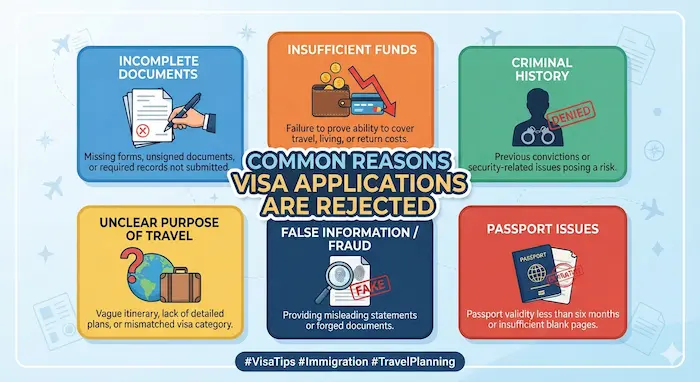

Applying for a visa can be stressful, especially after spending time and money preparing your documents. Unfortunately, having all the required paperwork does not automatically guarantee approval.
Visa applications can be refused for several reasons, including financial concerns, incomplete documentation, inconsistencies in the application and doubts about the purpose of travel.
For Kenyan travellers planning to visit another country, understanding the common reasons for visa refusals can help you prepare a stronger and more accurate application.
Important: Visa rules differ between countries and visa categories. A refusal reason that applies to one country may not apply to another. Always check the official embassy or immigration authority for the destination you are applying to.
1. Insufficient Financial Evidence
One of the common concerns in many visa applications is whether the applicant has sufficient funds for the proposed trip.
You may be asked to demonstrate that you can afford:
- Flights
- Accommodation
- Food
- Transportation
- Daily expenses
- Other costs associated with your trip
Simply having money in a bank account may not be enough. The visa authority may consider whether your finances are credible and consistent with your income and circumstances.
How to avoid this problem
Provide genuine financial documents requested by the relevant visa authority, such as:
- Bank statements
- Payslips
- Employment documents
- Business financial records
- Sponsorship documents, where applicable
Don’t deposit a large unexplained amount into your account just before applying.
2. Incomplete or Incorrect Documents
A missing document can result in a refusal or delay, depending on the country’s rules.
Common problems include:
- Missing bank statements
- Incorrect application forms
- Expired documents
- Missing invitation letters
- Missing employment letters
- Incorrect photographs
- Untranslated documents where translations are required
How to avoid it
Before submitting your application, compare your documents against the official checklist for your specific visa category.
Don’t rely on a checklist from another applicant because requirements can change.
3. Inconsistencies in Your Application
Visa officers may compare information across your:
- Application form
- Bank statements
- Employment documents
- Travel itinerary
- Invitation letter
- Interview answers
If the information doesn’t match, it can raise questions.
For example, your application may state that you are travelling for tourism, while another document suggests that your main purpose is business.
How to avoid it
Review your entire application before submission and make sure your information is accurate and consistent.
4. Doubts About Your Intention to Return
For many temporary visas, authorities need to be satisfied that you intend to comply with the conditions of the visa and leave when required.
A visa officer may consider your circumstances, including:
- Employment
- Business
- Family circumstances
- Financial situation
- Travel history
- Purpose of travel
- Overall circumstances
This does not mean you need to own property or have a particular amount of money to qualify.
How to avoid problems
Clearly explain your genuine purpose of travel and provide legitimate evidence supporting your circumstances.
Don’t manufacture documents simply to make your application appear stronger.
5. Weak or Unclear Travel Purpose
A visa application should clearly explain why you want to travel.
For example:
“I am travelling for tourism.”
may not adequately explain your plans if the application requires more detail.
Your supporting documents should demonstrate a genuine and reasonable travel plan where applicable.
For tourism, this could include:
- Proposed itinerary
- Accommodation information
- Travel dates
- Evidence of planned activities
The exact requirements depend on the destination.
6. Applying for the Wrong Visa
Different activities require different visa categories.
For example, a person travelling for:
- Tourism
- Employment
- Education
- Business
- Family visits
may need different types of permission.
Applying for a tourist visa when your actual purpose requires a work or study visa can create serious problems.
How to avoid it
Identify the correct visa category before starting your application.
If you are unsure, check the destination country’s official immigration website.
7. Providing False or Misleading Information
This is one of the most serious mistakes an applicant can make.
Examples include:
- False employment information
- Fake bank statements
- Fake invitation letters
- Misrepresenting travel history
- Hiding relevant information
- Using fraudulent certificates
Never submit documents you know are false.
A refusal can be much more serious when authorities believe an applicant deliberately provided misleading information.
8. Unexplained Large Bank Deposits
A bank account showing a sudden large deposit shortly before a visa application may raise questions if the source of the money isn’t clear.
For example, if your normal monthly income is relatively modest but your account suddenly receives a large amount, the visa authority may want to understand where the money came from.
What should you do?
If you have a legitimate reason for a large transaction, keep supporting evidence.
For example, it could be:
- Sale of an asset
- Business income
- Salary payment
- Loan
- Legitimate gift
- Other documented source of funds
Never create artificial transactions simply to meet a perceived visa requirement.
9. Weak Employment or Business Evidence
If you are employed, your application may need evidence of your employment depending on the visa requirements.
This could include:
- Employment letter
- Payslips
- Approved leave
- Employment contract
Business owners may need relevant evidence such as:
- Business registration
- Tax records
- Business bank statements
- Business permits
The specific requirements vary by destination.
10. Previous Visa Refusals
Having previously been refused a visa does not necessarily mean you can never receive a visa.
However, previous refusals may be relevant to future applications.
If an application asks about previous refusals, answer truthfully.
If your circumstances have changed or you have addressed the previous concerns, provide appropriate evidence where the application allows it.
11. Poor Travel History — Where Relevant
Some visa authorities consider previous international travel when assessing an application.
However, having little or no travel history does not automatically mean your application will be rejected.
If you are a first-time international traveller, focus on providing genuine documents and clearly explaining your travel plans.
12. Insufficient Evidence for Sponsorship
If another person is paying for your trip, you may need to provide evidence explaining the sponsorship arrangement.
Depending on the visa requirements, this could include:
- Sponsorship letter
- Proof of relationship
- Sponsor’s financial documents
- Sponsor’s identification
- Evidence of accommodation
- Other supporting documents
A sponsorship arrangement should be genuine and clearly documented
13. Poorly Prepared Visa Interview
For countries and visa categories that require interviews, your interview can be an important part of the process.
Problems can arise if an applicant:
- Cannot explain the purpose of the trip
- Gives answers inconsistent with the application
- Doesn’t know basic details about the trip
- Provides misleading answers
- Appears to be hiding important information
How to prepare
Review your application before the interview.
Know:
- Why you’re travelling
- Where you’re staying
- How you’re funding the trip
- How long you plan to stay
- What you intend to do
Answer questions truthfully and directly.
You don’t need to memorize a speech.
14. Applying Too Close to Your Travel Date
Visa processing can take time.
If you apply shortly before your planned departure, you may not have enough time to:
- Provide additional documents
- Attend another appointment
- Respond to requests
- Correct application problems
Check the official processing times and recommended application window before planning your trip.
15. Passport Problems
Your passport must meet the destination country’s requirements.
Problems may include:
- Insufficient validity
- Damaged passport
- Insufficient blank pages where required
- Incorrect personal information
Check the passport requirements before applying.
16. Failing to Follow Country-Specific Requirements
Visa applications are not identical around the world.
A document required for a UK visa may not be required for a Schengen visa, US visa or Canadian visa.
Similarly, application centres, fees, biometrics and interview requirements can differ.
Always use the official requirements for the country and visa category you are applying for.
What to Do If Your Visa Is Rejected
If your visa application is refused, don’t immediately submit another application without understanding why.
Start by reading the refusal letter carefully.
Look for:
- The specific reason for refusal
- Evidence the visa officer considered insufficient
- Whether you can appeal
- Whether you can request a review
- Whether you can submit a new application
The options available depend on the country and visa category.
Should You Apply Again After a Refusal?
You can consider reapplying if the applicable rules allow it and you have genuinely addressed the concerns raised.
For example, if your previous application lacked required documentation, a new application should provide the missing information where appropriate.
Simply submitting the same application again may not solve the underlying problem.
How to Improve Your Visa Application
Before submitting your application, ask yourself:
📄 Documents
Do I have every document required by the official checklist?
💰 Finances
Can I genuinely demonstrate how my trip will be funded?
✈️ Travel plans
Can I clearly explain why I’m travelling and what I intend to do?
💼 Employment/business
Can I provide legitimate evidence of my current circumstances if required?
🗣️ Interview
If an interview is required, can I explain my application clearly and honestly?
🔍 Accuracy
Is every piece of information truthful and consistent?
If the answer to these questions is yes, you are better prepared.
Final Thoughts
A visa refusal can be disappointing, but understanding the reason behind the decision is important.
Some applications are refused because of missing documents, insufficient evidence, unclear travel plans or concerns about the applicant’s circumstances. Others may involve country-specific requirements that applicants did not meet.
The best approach is to prepare early, follow the official checklist, provide genuine documents and answer questions honestly.
Most importantly, don’t pay someone to manufacture bank statements, employment letters or other documents. Fraudulent documents can create far more serious problems than a normal visa refusal.
Before applying, always check the latest information from the official embassy, consulate or immigration authority responsible for your destination.
