


How AI Is Transforming Industries
The robotics and automation industry is entering one of its most significant periods of growth, driven by rapid advances in artificial intelligence (AI), machine learning, computer vision, and sensor technologies. Once limited to repetitive tasks in factories, robots are now performing increasingly complex roles across manufacturing, logistics, healthcare, agriculture, retail, and even hospitality.
As businesses face labor shortages, rising operational costs, and growing demand for efficiency, automation is becoming a strategic investment rather than a luxury. Analysts expect the global robotics market to continue expanding over the coming years, with AI-powered robots leading the next wave of industrial transformation.
Why Robotics Is Growing Faster Than Ever
Several technological and economic factors are accelerating the adoption of robotics worldwide.
1. Artificial Intelligence Makes Robots Smarter
Modern robots no longer rely solely on pre-programmed instructions. AI enables machines to:
- Learn from experience
- Recognize objects and people
- Navigate dynamic environments
- Make real-time decisions
- Adapt to changing tasks
This intelligence allows robots to perform work that previously required human judgment, making them valuable in industries where flexibility is essential.
2. Businesses Face Labor Shortages
Many countries continue to experience shortages of skilled workers in manufacturing, warehousing, agriculture, and healthcare. Robots help fill these gaps by handling repetitive, physically demanding, or hazardous tasks while allowing employees to focus on higher-value work.
Instead of replacing entire workforces, many organizations are using robots to improve productivity and support existing staff.
3. Falling Hardware Costs
Robotics technology is becoming more affordable. Advances in sensors, processors, batteries, and cloud computing have significantly reduced the cost of deploying automated systems.
This means small and medium-sized businesses can now adopt robotics solutions that were once available only to large enterprises.
Manufacturing Leads the Automation Revolution
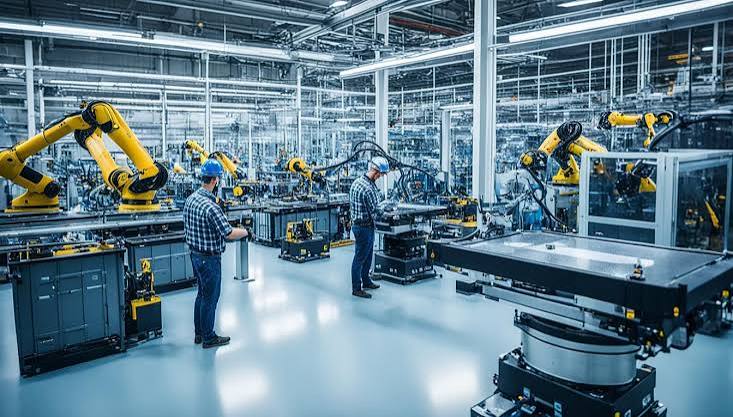
Manufacturing remains the largest market for industrial robotics.
Modern factories use robotic systems for:
- Welding
- Painting
- Assembly
- Packaging
- Quality inspection
- Material handling
AI-powered vision systems enable robots to detect product defects with remarkable accuracy, reducing waste and improving production quality.
Collaborative robots—often called “cobots”—are also becoming increasingly common. Unlike traditional industrial robots that operate behind safety barriers, cobots are designed to work safely alongside human workers, assisting with repetitive or physically demanding tasks.
Warehousing and Logistics Become More Intelligent
The rapid growth of e-commerce has accelerated investment in warehouse automation.
Today’s fulfillment centers use robots for:
- Picking products
- Sorting packages
- Inventory management
- Automated storage and retrieval
- Loading and unloading goods
Autonomous mobile robots (AMRs) can move efficiently through warehouses without fixed tracks, using AI to avoid obstacles and optimize routes.
Major logistics companies are also testing autonomous delivery vehicles and drones for last-mile deliveries, particularly in areas where traditional transportation is less efficient.
Healthcare Embraces Robotics
Healthcare organizations are increasingly adopting robotic technologies to improve patient care and operational efficiency.
Applications include:
- Robot-assisted surgery
- Pharmacy automation
- Hospital logistics
- Laboratory testing
- Rehabilitation therapy
- Elderly care support
AI-powered surgical robots provide enhanced precision, while autonomous hospital robots transport medicines, medical supplies, and laboratory samples throughout healthcare facilities.
As populations age globally, robotics is expected to play an increasingly important role in supporting healthcare professionals.
Agriculture Goes High-Tech
Modern agriculture is becoming increasingly automated as farmers seek higher productivity and sustainability.
Agricultural robots are now used for:
- Precision planting
- Crop monitoring
- Weed detection
- Harvesting
- Irrigation management
- Livestock monitoring
AI enables agricultural robots to identify plant diseases early, optimize fertilizer use, and reduce water consumption, improving yields while minimizing environmental impact.
Retail and Hospitality Join the Automation Trend
Retailers are also embracing robotics to improve customer experiences and operational efficiency.
Examples include:
- Automated inventory scanning
- Self-service checkout systems
- Warehouse fulfillment robots
- Restaurant food preparation
- Hotel delivery robots
- Customer assistance robots
While human interaction remains important, automation helps businesses reduce wait times and improve service consistency.
AI Is Making Robots More Adaptable
One of the biggest changes in robotics is the integration of generative AI and large language models.
Instead of relying solely on fixed programming, future robots will increasingly:
- Understand spoken instructions
- Respond naturally to customers
- Learn new tasks through observation
- Adapt to unfamiliar environments
- Collaborate more effectively with humans
This shift is expected to make robotics accessible across a much broader range of industries.
Challenges Facing Robotics Adoption
Despite rapid growth, several challenges remain.
High Initial Investment
Although costs are declining, deploying advanced robotic systems still requires significant upfront investment, particularly for smaller organizations.
Skills Gap
Businesses need workers with expertise in robotics, AI, software engineering, and maintenance to deploy and manage automated systems effectively.
Cybersecurity Risks
Connected robots introduce new cybersecurity concerns, making secure software and regular updates essential.
Ethical and Workforce Considerations
Automation continues to raise questions about workforce displacement. Many experts argue that robotics will reshape jobs rather than eliminate them entirely, creating demand for new technical and supervisory roles.
Opportunities for African Businesses
Africa is increasingly embracing robotics in sectors including agriculture, logistics, manufacturing, mining, and healthcare.
Growing investment in AI, startup innovation, and digital infrastructure presents significant opportunities for businesses to improve productivity through automation.
Local startups are also developing robotics solutions tailored to African challenges, such as precision farming, medical delivery systems, and warehouse management.
As governments and private investors continue supporting innovation, robotics could become a key driver of economic growth across the continent.
The Road Ahead
Industry experts expect robotics and automation to become deeply integrated into everyday business operations over the next decade.
Emerging technologies likely to shape the future include:
- AI-powered humanoid robots
- Autonomous industrial vehicles
- Smarter warehouse automation
- Collaborative robotics
- Drone-based logistics
- Predictive maintenance systems
- Digital twins for manufacturing
As these technologies mature, robots will become more intelligent, affordable, and capable of working safely alongside people.
Conclusion
Robotics and automation are no longer limited to futuristic concepts or highly specialized factories. In 2026, they have become essential tools for improving efficiency, addressing labor shortages, and enabling businesses to compete in an increasingly digital economy.
Powered by advances in artificial intelligence, robotics is entering a new growth phase that promises to transform industries ranging from manufacturing and healthcare to agriculture and logistics. Organizations that invest in automation today are likely to be better positioned for the challenges and opportunities of tomorrow.
