

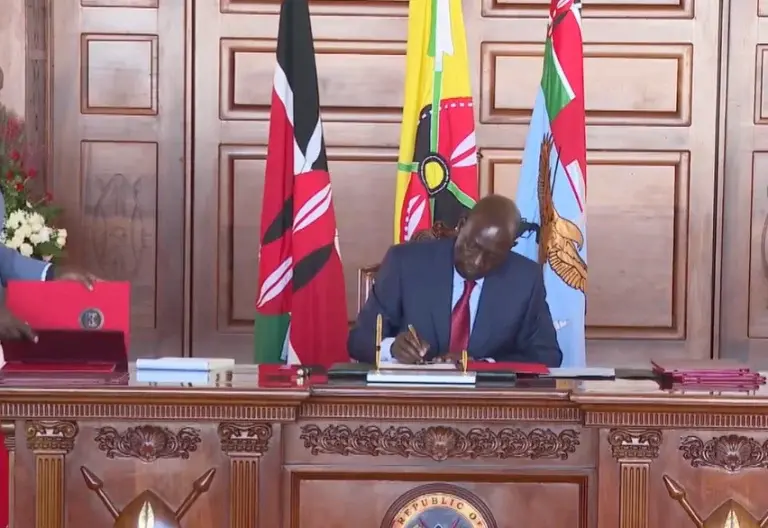

President William Ruto has made fresh appointments and reappointments to several key government boards, with changes affecting institutions responsible for cybersecurity, railway infrastructure and medical training.
The appointments were announced through Gazette Notices dated August 21, 2026, with most of the new terms taking effect on the same date.
Among the most notable changes for Kenya’s technology sector is the appointment of Dr Martin Koyabe as the Non-Executive Chairperson of the Board of Directors of the National Cybersecurity Agency.
Ruto also appointed Lynette Njeru as Chairperson of the Railway Development Levy Fund Board and reappointed Joseah Kiplangat Cheruiyot as Chairperson of the Kenya Medical Training College (KMTC) Board of Management for another three-year term.
Martin Koyabe Appointed Cybersecurity Agency Chair
Dr Martin Koyabe has been appointed to lead the Board of Directors of the National Cybersecurity Agency for a three-year term.
His appointment took effect on August 21, 2026, according to reports citing the Gazette Notice.
The appointment comes at a time when cybersecurity is becoming increasingly important to Kenya’s digital economy.
Kenya has experienced rapid growth in mobile money, digital banking, e-commerce, cloud services and online government platforms. That expansion has also increased the potential impact of cyberattacks, data breaches, online fraud and other digital threats.
The leadership of the National Cybersecurity Agency will therefore be closely watched as Kenya continues expanding its digital infrastructure.
Why the Cybersecurity Appointment Matters
The appointment of a new chairperson comes at an important stage for Kenya’s technology ecosystem.
Millions of Kenyans now rely on digital platforms for financial transactions, communication, government services, education and business.
Mobile money services such as M-Pesa have made Kenya one of Africa’s most advanced digital financial markets, while businesses are increasingly moving their operations online.
This creates a larger cybersecurity responsibility for government agencies.
A strong cybersecurity strategy needs to address issues ranging from protection of critical infrastructure and government systems to cybercrime, digital identity protection and public awareness.
For technology companies and startups, government policy on cybersecurity can also influence how they design and protect their platforms.
Lynette Njeru Named Railway Development Levy Fund Chair
Ruto also appointed Lynette Njeru as the Non-Executive Chairperson of the Railway Development Levy Fund Board for a three-year term.
Her appointment also took effect on August 21, 2026.
The Railway Development Levy Fund supports railway infrastructure development in Kenya.
The appointment comes as Kenya continues to consider the role of rail infrastructure in supporting trade, passenger transportation and economic development.
Joseah Kiplangat Cheruiyot Reappointed to KMTC
President Ruto has also reappointed Joseah Kiplangat Cheruiyot as Chairperson of the Board of Management of the Kenya Medical Training College.
Cheruiyot will serve another three-year term beginning August 21, 2026.
The reappointment provides continuity for the institution as KMTC continues training healthcare professionals for Kenya’s health sector.
Other Government Board Changes
The August 21 Gazette Notices also included appointments by several Cabinet Secretaries to government boards and institutions.
Among the changes reported were appointments involving the National Campaign Against Drug Abuse Authority and the National Transport and Safety Authority, as well as changes to other government boards.
These appointments form part of broader changes in the leadership of state institutions.
What the Changes Mean for Kenya’s Technology Sector
Of the three presidential appointments, Martin Koyabe’s appointment is likely to attract the greatest attention from the technology industry.
Cybersecurity is no longer simply an IT issue. It has become a national economic and infrastructure concern.
As Kenya increases its dependence on digital services, the country needs stronger systems for preventing cyberattacks, responding to incidents and protecting sensitive information.
The National Cybersecurity Agency will therefore have an increasingly important role in Kenya’s digital future.
For Kenyan technology companies, the agency’s direction could influence cybersecurity standards, cooperation between government and private-sector organisations, and the country’s broader response to emerging cyber threats.
A More Digital Kenya Needs Stronger Cybersecurity
Kenya’s digital transformation has created enormous opportunities.
From mobile payments and digital lending to e-commerce, online education, cloud computing and artificial intelligence, technology is becoming deeply embedded in everyday life.
But digital growth also creates new risks.
The appointment of Martin Koyabe comes as Kenya faces the challenge of ensuring that its digital transformation is accompanied by stronger cybersecurity protections.
For consumers, businesses and government institutions, cybersecurity will increasingly be viewed not as an optional technology investment but as a fundamental part of operating in a digital economy.
Bottom Line
President William Ruto’s latest appointments place new leadership at three important government institutions.
Lynette Njeru will chair the Railway Development Levy Fund Board, Joseah Kiplangat Cheruiyot has been given another three-year term at KMTC, while Dr Martin Koyabe will lead the Board of Directors of the National Cybersecurity Agency for three years.
For TechDrivers readers, Koyabe’s appointment is particularly significant.
As Kenya becomes increasingly dependent on digital services, the leadership of the country’s cybersecurity institutions will play an important role in determining how effectively Kenya protects its digital economy.
The coming years could make cybersecurity one of the most important pillars of Kenya’s technology strategy.
