

Tesla has finally put a date on one of its most delayed electric vehicle projects.
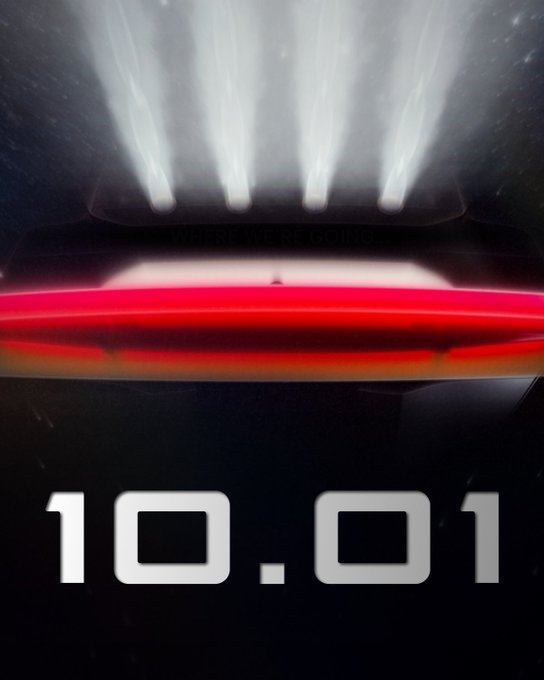
The automaker will unveil the next-generation Tesla Roadster on October 1, 2026, in Waco, Texas, nearly nine years after the electric sports car was first shown as a prototype in 2017. Tesla confirmed the date with a teaser carrying the words “Go for launch” and “10.01,” followed by invitations to reservation holders.
The announcement has renewed attention around a vehicle that has spent years between concept, engineering project and highly anticipated production model.
The Roadster is expected to sit at the top of Tesla’s performance lineup, targeting the electric supercar market rather than the mass-market EV segment.
But this unveiling is about more than another Tesla model.
It is also a test of whether Tesla can finally turn years of ambitious promises surrounding the Roadster into a production vehicle.
Tesla Roadster reveal date confirmed for October 1
Tesla’s October 1 event will take place in Waco, Texas.
The announcement is significant because the Roadster has gone through several postponed timelines since it was first introduced in November 2017. Reuters describes the October event as the planned unveiling of the long-delayed next-generation model.
Tesla has also placed a countdown on its Roadster website, reinforcing the October 1 date.
The Waco location is also notable because it is close to SpaceX’s McGregor, Texas, testing facility, which has been associated with Tesla’s plans for an unusual version of the Roadster featuring SpaceX-related technology.
Tesla has not publicly confirmed every technical detail expected at the event, meaning some of the most dramatic claims surrounding the car should still be treated as expectations rather than final specifications.
Why the “Go for launch” teaser matters
Tesla’s teaser was deliberately designed to create curiosity.
The image shows the Roadster under dramatic lighting resembling a launch environment, accompanied by the words “Go for launch.” The graphic has also intensified speculation about the car’s proposed SpaceX-related propulsion technology.
A separate version of the Roadster website imagery appears to show the vehicle upside down with what look like four plumes emerging from its rear area. That has renewed discussion about the cold-gas thruster system that Elon Musk has previously associated with a so-called SpaceX Package.
However, there is an important distinction between a teaser and a confirmed production specification.
Tesla has not yet publicly provided a complete technical specification sheet for the production Roadster.
That means buyers and observers should wait for the October event before treating the most ambitious claims as final.
The SpaceX connection
One of the most unusual aspects of the new Roadster is its proposed connection to SpaceX.
Musk has previously talked about fitting the Roadster with a SpaceX Package using cold-gas thrusters to enhance the vehicle’s performance.
The concept has generated considerable attention because it goes beyond conventional electric-car engineering.
Rather than relying only on battery power, electric motors, tyres and aerodynamics, the proposed system would use compressed gas-based propulsion technology to provide additional thrust.
Recent reports have linked the October event with a possible demonstration of this technology. Reuters reported that the event could include a demonstration of a limited-edition Roadster equipped with cold-gas thrusters.
Still, Tesla has not publicly confirmed that the production vehicle will actually fly or hover as part of the October demonstration.
That distinction matters.
A dramatic demonstration would generate enormous publicity, but the engineering, safety, regulatory and practical implications of such a system would be very different from those of a conventional road-going EV.
What Tesla originally promised
When Tesla first unveiled the next-generation Roadster in 2017, the company positioned it as an electric performance machine capable of challenging some of the world’s fastest production cars.
Tesla’s Roadster page continues to describe the vehicle as an all-electric sports car designed around record-setting acceleration, range and performance.
The original targets included:
- 0–60 mph in about 1.9 seconds
- A top speed above 250 mph
- A claimed range of around 620 miles
- A 200 kWh battery
- Seating for four
Those figures were presented during the original Roadster unveiling and have remained part of the model’s long-running story.
However, because the production vehicle has not yet been delivered, consumers should not assume that the original prototype specifications will necessarily match the final production car.
The Roadster has faced years of delays
The October 1 announcement comes after a long development period.
Tesla unveiled the second-generation Roadster in 2017 and originally expected production much earlier.
The car has subsequently been delayed as Tesla focused on other vehicles and technologies.
That history makes October 1 particularly important.
The company is no longer simply promising that the Roadster is coming.
It is now preparing an actual unveiling event and has invited reservation holders to attend in Waco.
However, an unveiling is still different from mass production.
The crucial question after October 1 will be when customers can actually receive production vehicles.
The Roadster is not Tesla’s mass-market EV
It is also important to understand where the Roadster fits into Tesla’s broader business.
The Model 3 and Model Y are designed for much wider consumer markets.
The Roadster is different.
It is a halo vehicle.
Its purpose is partly to demonstrate what Tesla can achieve in electric performance, technology and engineering.
That means the number of Roadsters Tesla sells may be less important than the technology and attention generated by the car.
A successful Roadster could strengthen Tesla’s position in the high-performance EV market while providing a technology showcase for future vehicles.
Can the Roadster still claim the performance crown?
This is another question Tesla will face.
The electric performance-car market has changed considerably since 2017.
When the Roadster was first unveiled, its claimed 1.9-second 0–60 mph time appeared extraordinary.
Today, several electric performance vehicles compete at extremely high levels.
That means Tesla cannot rely on the original specifications alone to make the new Roadster revolutionary.
The company will need to demonstrate what has changed during the nearly nine years of development.
That could include acceleration, braking, battery performance, thermal management, handling, charging capability, software and the proposed SpaceX technology.
What buyers should watch for on October 1
The biggest information gap surrounding the Roadster is no longer its existence.
It is the final specification.
Here are the most important details to watch:
1. Final acceleration figures
Tesla has previously promised extraordinary acceleration.
The production car will need to demonstrate whether those targets have survived the development process.
2. Real-world range
The earlier 620-mile figure is based on Tesla’s longstanding Roadster claims.
A production vehicle’s certified range, however, will be more important to buyers than a headline target.
3. Battery capacity
Tesla has previously cited a 200 kWh battery for the Roadster.
The final production specification could provide more clarity on the battery architecture, charging performance and thermal management.
4. Charging speed
For an electric performance car, charging is almost as important as range.
A large battery can provide impressive range, but fast charging determines how quickly drivers can get back on the road.
5. Price
Tesla previously promoted the Roadster at a price far above its mainstream models.
The final production price will be particularly important because the high-performance EV market has become increasingly competitive.
6. SpaceX Package
This could be the most controversial part of the reveal.
If Tesla demonstrates cold-gas thrusters, observers will want to know how the system works, how much it affects performance and whether it will be available to ordinary customers.
7. Production timeline
Perhaps the most important question of all is simple:
When will Tesla actually start delivering the Roadster?
What the Roadster means for electric mobility
The Roadster is unlikely to transform everyday transportation.
Most EV buyers are more concerned about affordability, charging infrastructure, reliability, battery life and operating costs than achieving supercar acceleration.
But high-performance EVs play a different role in the market.
They demonstrate that electric powertrains can compete with — and potentially exceed — combustion engines in areas traditionally associated with performance cars.
That can influence perceptions of electric vehicles more broadly.
The Roadster therefore functions partly as a technology showcase.
What it could mean for Kenya
For Kenyan EV buyers, the Roadster is unlikely to become a mainstream vehicle.
Its expected positioning makes it a niche product for wealthy enthusiasts rather than a practical choice for most motorists.
However, the technology direction is still relevant.
Kenya’s electric mobility market is developing around very different priorities: electric motorcycles, affordable passenger vehicles, commercial fleets, charging infrastructure and lower running costs.
The Roadster demonstrates the other end of the EV market — where manufacturers are pushing electric powertrains toward extreme performance.
The more important lesson for Kenya may therefore be technological rather than commercial.
Advances in batteries, electric motors, power electronics, thermal management and charging technology developed for high-performance vehicles can eventually influence other parts of the EV industry.
The bigger question for Tesla
The October 1 event gives Tesla an opportunity to close one of the longest-running chapters in its product history.
The company has spent years talking about the next-generation Roadster.
Now it needs to show what actually exists.
A dramatic prototype reveal would generate headlines.
A working production-ready vehicle with clear specifications, a credible price and a realistic delivery schedule would be much more significant.
That is the standard against which the October event should ultimately be judged.
Conclusion
Tesla’s October 1 Roadster reveal is one of the company’s most anticipated product events in years.
Nearly nine years after the second-generation Roadster was first shown, Tesla is preparing to reveal the vehicle in Waco, Texas, with a teaser that strongly hints at the company’s long-promised SpaceX connection.
But the most important story will not necessarily be the spectacle.
It will be the details.
Can Tesla deliver the acceleration it promised? How much range will the production car achieve? How quickly will it charge? What will it cost? Will the SpaceX Package actually work as demonstrated? And, most importantly, when will customers finally receive their cars?
After nearly a decade of waiting, October 1 could finally provide answers.
Frequently Asked Questions
When will Tesla unveil the new Roadster?
Tesla has set October 1, 2026, for the unveiling of the next-generation Roadster in Waco, Texas.
How long has the Tesla Roadster been delayed?
The second-generation Roadster was first unveiled in 2017, making the upcoming reveal nearly nine years after the original prototype presentation.
What is the Tesla Roadster?
The Roadster is Tesla’s high-performance electric sports car and is positioned as a halo vehicle for the company’s electric vehicle technology. Tesla describes it as an all-electric sports car focused on acceleration, range and performance.
Will the Tesla Roadster have SpaceX thrusters?
Tesla has teased technology associated with SpaceX cold-gas thrusters, and reports suggest the October event could include a demonstration. However, Tesla has not yet publicly confirmed all production specifications or exactly how the technology will be offered.
How fast is the Tesla Roadster expected to be?
Tesla’s original Roadster claims included a 0–60 mph time of 1.9 seconds and a top speed above 250 mph. The final production specifications have yet to be confirmed.
Will the Tesla Roadster be sold in Kenya?
Tesla has not announced a specific Kenyan launch plan for the Roadster. Given its positioning as a high-performance, premium EV, it would likely remain a niche vehicle in markets where it becomes available.
Why is the Tesla Roadster important?
The Roadster is important because it represents Tesla’s attempt to demonstrate how far electric vehicle performance can be pushed. It could also showcase technologies that influence the company’s future EV development.
