
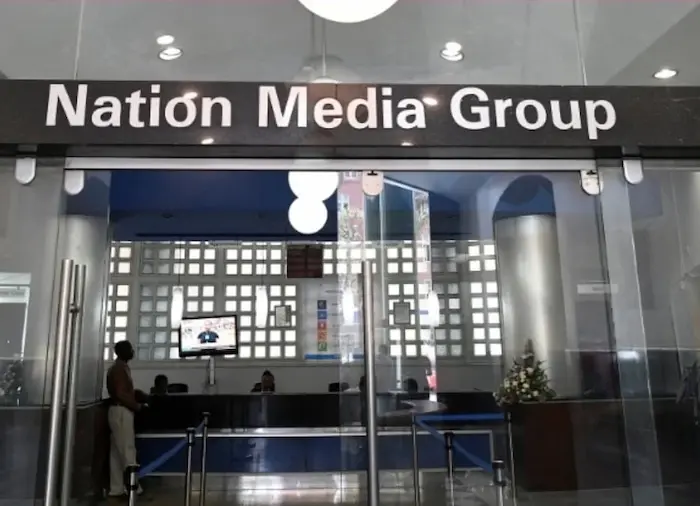

Nation Media Group (NMG) is under growing pressure to accelerate its digital transformation as declining print revenue weighs on the company’s financial performance.
For the six months ended June 30, 2026, NMG reported KSh 2.85 billion in turnover, down from KSh 2.99 billion during the same period in 2025. Its net loss also widened significantly, reaching KSh 357.2 million, compared with KSh 41.7 million a year earlier.
But the financial results tell only part of the story.
Behind the numbers, NMG is attempting to reshape its traditional media business around digital products, technology infrastructure, subscriptions, first-party data, mobile platforms and new forms of audience monetisation.
That makes NMG’s transformation relevant beyond the media industry.
It offers a glimpse into how one of Kenya’s largest traditional media companies is adapting to an economy where audiences increasingly consume information through smartphones, apps, social media and digital platforms.
NMG’s Financial Results Show the Pressure
NMG’s first-half 2026 results demonstrate why digital transformation has become increasingly important.
| Financial metric | H1 2025 | H1 2026 | Change |
|---|---|---|---|
| Turnover | KSh 2.99 billion | KSh 2.85 billion | -4.8% |
| Gross profit | KSh 2.02 billion | KSh 1.93 billion | -4.5% |
| Loss before tax | KSh 48.7 million | KSh 440.8 million | Significant increase |
| Net loss | KSh 41.7 million | KSh 357.2 million | Significant increase |
| Gross margin | 67.5% | 67.7% | Slight improvement |
| Operating cash outflow | KSh 144.1 million | KSh 59.1 million | Improved |
The decline in turnover reflects pressure across parts of the traditional media business, particularly print.
At the same time, some areas are showing resilience.
NMG’s broadcasting revenue increased 3%, while subscription revenue grew 4% during the period.
This creates an important distinction.
NMG is not simply facing a problem of declining audiences.
It is facing the much more difficult challenge of turning changing audience behaviour into sustainable digital revenue.
Why Print Is Becoming More Difficult
Newspapers remain an important part of Kenya’s media landscape, but the economics of print have become increasingly challenging.
Readers can now receive news instantly through smartphones, websites, apps, social-media platforms and messaging services.
Advertisers have also gained access to digital platforms that provide detailed audience targeting, measurement and campaign optimisation.
Traditional newspapers therefore face pressure from both sides.
Readers have more digital alternatives, while advertisers have more places to spend their budgets.
Print also carries significant physical costs, including:
- Printing
- Paper
- Distribution
- Transportation
- Fuel
- Warehousing
- Retail logistics
When circulation and advertising revenue decline, those costs become more difficult to support.
NMG has indicated that it intends to maintain commercially viable print operations while continuing its transition toward digital products and other revenue streams.
That means the company’s future is unlikely to be about abandoning traditional media overnight.
Instead, it is about finding a way to make its established brands work in a digital environment.
Digital Growth Is Becoming Central to NMG’s Strategy
NMG has been investing in digital products and technology for several years.
Its digital audience has grown significantly, while the company has increasingly focused on digital advertising, subscriptions, data and technology infrastructure.
This creates an important opportunity.
NMG already has something many new digital businesses spend years trying to build:
a large established audience.
The challenge is converting that audience into sustainable digital revenue.
A large number of website visitors does not automatically translate into strong profitability.
NMG therefore needs to understand not only how many people use its digital platforms, but also:
- How frequently they return
- What content they consume
- Whether they subscribe
- Which products they use
- How they interact with advertising
- Which audiences are willing to pay
- How much it costs to acquire and retain users
That is where technology becomes strategically important.
First-Party Data Could Become One of NMG’s Most Important Assets
One of the biggest changes in digital media is the increasing importance of first-party data.
First-party data is information a company collects directly through its own platforms and interactions with customers.
For NMG, that could include information about how registered users interact with:
- News websites
- Mobile applications
- Newsletters
- Subscription products
- Events
- Digital content
- Other NMG services
Used responsibly and in accordance with applicable privacy requirements, this information can help a publisher understand its audience more effectively.
For example, NMG could identify that a particular group of readers consistently consumes business and financial content.
That knowledge could help the company develop more relevant:
subscriptions + newsletters + advertising products + premium content.
The value is therefore not simply in collecting data.
The value is in using technology to turn audience information into better products and stronger customer relationships.
NationApp Could Strengthen the Direct Relationship With Readers
Mobile technology is another important part of the transformation.
Kenya is a mobile-first market, and many people now consume news primarily through smartphones.
NMG has been developing its NationApp as part of its digital strategy.
A successful news application could give NMG something that is difficult to achieve through third-party social platforms:
a direct relationship with the reader.
An app can provide:
- Breaking-news notifications
- Personalised content
- Subscription management
- Content recommendations
- Direct communication
- Reader engagement
- Digital advertising opportunities
It also gives the publisher greater control over the user experience.
That matters because relying entirely on social networks to distribute journalism means publishers are dependent on platforms whose algorithms, policies and business models they do not control.
Subscriptions Could Become More Important
Digital advertising remains an important source of revenue for publishers, but advertising alone can be difficult to rely on.
This is partly because global technology companies control large parts of the digital advertising ecosystem.
For publishers, one alternative is to build direct revenue relationships with readers.
That means asking a different question.
Instead of:
How many people can we attract to our website?
the business increasingly needs to ask:
How many people are willing to pay for valuable information?
NMG has already experimented with subscription and paywall models on some of its digital publications.
This approach may be particularly valuable for specialised content.
Readers may be more willing to pay for information that helps them:
- Make business decisions
- Understand financial markets
- Follow economic developments
- Track industries
- Access specialised analysis
- Make professional decisions
The challenge is finding the right combination of content, pricing and user experience.
AI Could Change How Media Companies Operate
Artificial intelligence is another technology that could influence NMG’s transformation.
AI tools can potentially assist media organisations with:
- Transcription
- Translation
- Content discovery
- Search
- Recommendation systems
- Audience analysis
- Video production
- Personalisation
- Workflow automation
For a large newsroom, some of these applications could improve productivity.
However, AI also creates new challenges for publishers.
Search engines and AI assistants can increasingly provide users with summaries without requiring them to visit the original website.
That creates a difficult question for digital publishers:
How do you make original journalism valuable enough that audiences still want to visit, subscribe and engage directly?
The answer is unlikely to be simply publishing more content.
Trust, original reporting, exclusive information, analysis and strong digital products could become increasingly important.
Video Is Also Changing the Media Business
Traditional broadcasting is facing its own digital transformation.
NMG’s broadcasting revenue grew 3% in H1 2026, demonstrating that television and broadcasting remain commercially relevant.
But audiences increasingly consume video across multiple platforms.
A single news story can now become:
- A television report
- A YouTube video
- A TikTok clip
- An Instagram Reel
- A website article
- A podcast
- A newsletter
Technology allows publishers to distribute the same underlying journalism across multiple formats.
This creates an opportunity for NMG to think of itself less as a newspaper company and more as a multi-platform content and technology business.
The Mobile-First Kenyan Audience Matters
The Kenyan digital market has changed dramatically.
People can discover a news story while scrolling through social media, receive a notification on their phone and then watch a video about the same story on another platform.
That means the traditional newspaper model of:
Print newspaper → reader
has evolved into something much more complex:
Smartphone → app → social media → website → video → newsletter → subscription.
NMG therefore needs technology capable of connecting these different experiences.
The objective is not simply to publish content everywhere.
It is to build a consistent relationship with audiences across multiple digital channels.
NMG’s Technology Investment Is More Than an IT Project
One of the most important aspects of NMG’s transformation is the move toward a more unified technology infrastructure.
Modern digital media companies require systems capable of handling:
- Audience analytics
- Content management
- Digital advertising
- Subscriptions
- User accounts
- Mobile applications
- Video
- Data
- Personalisation
- Security
These systems increasingly need to work together.
A publisher may have millions of readers, but if its technology systems operate separately, it becomes harder to understand audiences and create personalised digital products.
A more integrated technology environment can potentially allow NMG to connect its content, audience and commercial systems more effectively.
That makes technology part of the company’s core business strategy rather than simply a support function.
NMG Still Has Financial Challenges
Digital transformation requires investment.
NMG’s H1 2026 results show that the company is undertaking this transition while dealing with significant financial pressure.
The company’s net loss increased to KSh 357.2 million, while turnover declined to KSh 2.85 billion.
Cash and short-term investments were reported at approximately KSh 1.89 billion at the end of June 2026, compared with about KSh 1.99 billion at the end of 2025.
Operating cash outflow, however, improved from approximately KSh 144.1 million in H1 2025 to KSh 59.1 million in H1 2026.
These figures suggest that the company still has resources to invest in its transformation, but prolonged losses would make that transition more difficult.
Delayed Payments Add More Pressure
NMG’s financial performance has also been affected by issues outside the direct shift from print to digital.
The company’s results point to provisions associated with delayed government payments, while higher fuel costs have also affected distribution.
For a large media organisation, delayed payments can create working-capital pressure.
The company still has expenses to meet even when money owed by customers or institutions has not yet been received.
This makes efficient cash management increasingly important while NMG invests in its digital future.
What NMG’s Transformation Means for Kenya’s Digital Economy
NMG’s transition is relevant beyond the company itself.
Kenya’s digital economy increasingly depends on companies building sustainable online business models.
Media is one example.
The same questions are being asked across other industries:
How do you attract users?
How do you keep them engaged?
How do you convert digital activity into revenue?
How do you use data responsibly?
How do you reduce dependence on third-party platforms?
These are technology and business questions that affect companies across Kenya.
NMG’s experience therefore provides an interesting case study in digital transformation.
What NMG Needs to Get Right
The company’s transformation will ultimately depend on execution.
Several areas are particularly important.
1. Build Valuable Digital Products
Digital transformation should not simply mean putting newspaper articles online.
NMG needs products that give users a reason to return.
That could include:
- News applications
- Premium subscriptions
- Newsletters
- Business intelligence
- Podcasts
- Video
- Events
- Specialised digital services
2. Strengthen First-Party Relationships
Direct relationships with readers can reduce dependence on third-party platforms.
Registration, subscriptions, newsletters and mobile applications can all contribute to this relationship.
3. Improve Digital Monetisation
Growing digital audiences are valuable only when they can be converted into sustainable revenue.
Advertising, subscriptions, partnerships, events and specialised products could provide multiple revenue streams.
4. Use AI Responsibly
AI could improve newsroom efficiency, but it should complement rather than replace editorial judgment.
Accuracy, verification and trust remain essential.
5. Make Mobile a Priority
Kenyan audiences increasingly consume digital content through smartphones.
Fast, reliable and useful mobile products will therefore be central to the company’s digital strategy.
Is NMG in Trouble?
The financial results clearly show that NMG is under pressure.
A KSh 357.2 million net loss is significant, particularly when compared with the KSh 41.7 million loss recorded during the same period in 2025.
Turnover also declined.
However, describing NMG simply as a company in decline would miss the larger picture.
The company still has:
- Established media brands
- Large audiences
- Digital platforms
- Broadcasting operations
- Regional operations
- Experienced journalism teams
- Subscription products
- Technology investments
- Valuable audience relationships
The more important question is whether NMG can successfully convert those assets into a sustainable digital business.
The Bigger Lesson for Kenya’s Media Industry
NMG’s transformation illustrates a wider shift taking place across Kenya’s media industry.
The traditional model relied heavily on:
Print + advertising + broadcasting.
The emerging model is more diversified:
Digital audiences + subscriptions + data + advertising + video + events + partnerships + technology.
The companies that adapt successfully will not necessarily be the ones that publish the most content.
They may be the ones that understand their audiences best and build products those audiences are willing to use and pay for.
Bottom Line
Nation Media Group is at an important stage in its digital transformation.
Its H1 2026 results show continued financial pressure, with turnover falling 4.8% to KSh 2.85 billion and the net loss widening to KSh 357.2 million.
At the same time, broadcasting and subscription revenue are growing, while NMG continues investing in digital products, technology infrastructure, audience data and new ways of reaching readers.
That creates a company caught between two business models.
The traditional media model is becoming harder to sustain, while the digital model still needs stronger monetisation.
For NMG, the next phase will therefore be about more than moving content from newspapers to websites.
It will be about building a technology-driven media business that can turn audiences into sustainable digital revenue.
And for Kenya’s wider digital economy, NMG provides an important example of what happens when an established company has to reinvent itself for a mobile-first, data-driven and increasingly AI-powered world.
The real test is no longer whether NMG can reach digital audiences.
It is whether it can build a profitable digital relationship with them.
