
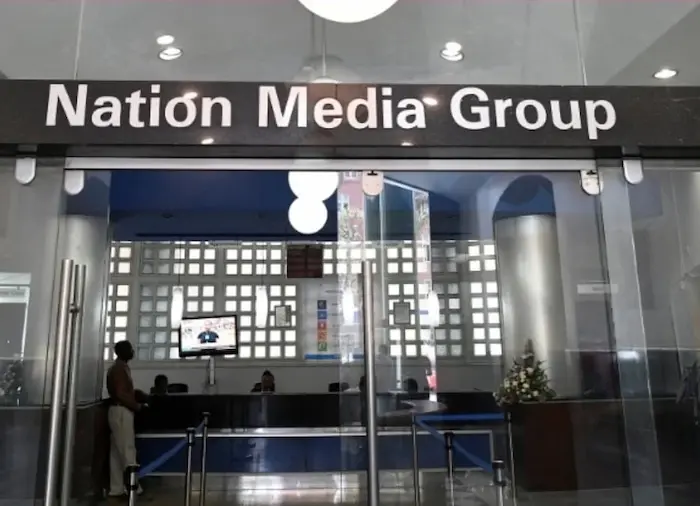

Nation Media Group (NMG) is facing another difficult financial period as declining print revenue continues to put pressure on one of East Africa’s largest media companies.
The latest numbers show that the challenge is no longer simply about newspapers selling fewer copies.
It is about whether NMG can successfully transform its traditional media business into a profitable digital media and technology company before the decline in legacy revenue becomes too difficult to absorb.
For the six months ended June 30, 2026, NMG reported KSh 2.85 billion in turnover, down 4.8% from KSh 2.99 billion during the same period in 2025. More concerning, its net loss widened to KSh 357.2 million, compared with KSh 41.7 million a year earlier. Loss before tax increased to KSh 440.8 million from KSh 48.7 million.
Yet there is another side to the story.
NMG’s broadcasting revenue grew 3%, while subscription revenue increased 4%. The company is also investing in digital products, unified technology infrastructure and audience monetisation as it attempts to reduce its dependence on traditional media.
The question is whether those investments can grow quickly enough.
NMG’s Latest Numbers Tell a Difficult Story
The first-half results show the scale of the pressure.
| Financial metric | H1 2025 | H1 2026 | Change |
|---|---|---|---|
| Turnover | KSh 2.99B | KSh 2.85B | -4.8% |
| Gross profit | KSh 2.02B | KSh 1.93B | -4.5% |
| Loss before tax | KSh 48.7M | KSh 440.8M | Much wider loss |
| Net loss | KSh 41.7M | KSh 357.2M | Much wider loss |
| Gross margin | 67.5% | 67.7% | Slight improvement |
| Operating cash outflow | KSh 144.1M | KSh 59.1M | Improved |
The numbers reveal something important.
NMG isn’t simply losing money because every part of the business is deteriorating.
Some businesses are growing.
The bigger problem is that growth in digital and broadcasting isn’t yet large enough to compensate for weakness elsewhere, particularly print.
Print Remains the Biggest Problem
The newspaper business that built NMG’s financial strength is facing the same structural problem affecting publishers around the world.
Consumers have moved online.
Advertisers have followed audiences to:
- TikTok
- YouTube
- Programmatic advertising platforms
- Influencer networks
That leaves traditional publishers competing for a shrinking share of advertising revenue.
NMG’s latest results specifically point to lower print revenue as a major factor behind the 4.8% decline in group turnover.
This creates a difficult business equation.
Print has historically provided significant revenue, but keeping a large print operation also requires:
- Printing infrastructure
- Paper
- Ink
- Distribution
- Fuel
- Warehousing
- Logistics
- Retail distribution
Those costs become increasingly difficult to justify when circulation and advertising revenue decline.
But NMG Is Not Abandoning Print
The company’s strategy is not simply to shut down newspapers.
NMG has said it intends to maintain a presence in commercially viable print media while accelerating digital transformation. It is also pursuing audience revenue, broadcasting, business-to-business partnerships, thought leadership and events.
That makes strategic sense.
A brand such as the Daily Nation still has enormous recognition.
The challenge is converting that brand equity into revenue in a world where readers increasingly expect information to be available instantly on their phones.
Digital Is Growing — But Is It Growing Fast Enough?
This is arguably the most important question facing NMG.
The company has been investing heavily in digital products and monetisation.
During H1 2025, NMG reported 7% growth in its digital business, supported by a digital audience base of 63.8 million users.
The company also reported 11% growth in its digital business during 2024, despite total group turnover falling 12.5%. Its digital audience reached 62.4 million users in 2024, compared with 60.2 million the previous year.
That shows the direction of travel.
The audience is moving online.
The problem is monetisation.
Having millions of users doesn’t automatically create millions of shillings in profit.
The Digital Advertising Problem
This is where the economics of modern media become complicated.
A newspaper publisher can have millions of digital readers but still struggle financially.
Why?
Because much of the digital advertising market is controlled by global technology platforms.
Google and Meta, for example, operate enormous advertising ecosystems with sophisticated targeting and measurement capabilities.
A Kenyan publisher therefore competes for digital advertising while also competing against platforms that own much of the advertising infrastructure.
NMG’s response has been to develop more direct relationships with audiences.
That means moving beyond:
Audience → Advertiser
toward:
Audience → NMG → Subscription / membership / events / commerce / advertising
That is a much more diversified business model.
Paywalls Are Becoming Important
NMG has already experimented with paywalls across some of its digital publications.
The Business Daily, for example, has been placed behind a paywall as the company attempts to generate revenue directly from readers rather than relying entirely on advertising.
This is an important change in mindset.
For decades, newspapers largely operated under a model where:
Readers buy newspapers → advertisers pay for access to readers.
Digital media increasingly requires another option:
Readers pay publishers directly for valuable information.
That is particularly relevant for specialist journalism.
Business information, financial news, investigations and premium analysis can potentially command subscription revenue that general news struggles to generate.
NMG’s Technology Strategy Is Becoming More Important
This is where the story becomes particularly relevant to a technology publication like TechDrivers.
NMG’s transformation isn’t simply about launching more websites.
It is increasingly about building a technology platform for media.
Its 2024 strategy highlighted investment in:
- First-party data
- An owned technology stack
- Data and technology capabilities
- Digital capital investment
- Digital advertising
- Audience knowledge
- New digital products
The company also identified the goal of building a more diversified portfolio of products and growing its digital reach.
That strategy is critical because the future media company is increasingly a technology company.
Why First-Party Data Matters
First-party data could become one of NMG’s most valuable assets.
Consider a reader visiting Nation.co.ke.
If NMG only knows that the person viewed a page, the commercial value is limited.
But if NMG understands:
- What topics the reader follows
- How often they visit
- What products they read
- What subscriptions interest them
- What newsletters they use
- Which events they attend
the company can potentially build much more valuable relationships.
That can support:
Personalisation + subscriptions + targeted advertising + product development.
It also reduces dependence on third-party platforms.
The Nation App Could Be Important
NMG has been accelerating the rollout of its NationApp as part of its digital strategy.
Recent reporting indicates management said the app was helping accelerate digital uptake, while NMG’s H1 2026 strategy includes continued investment in unified technology.
The significance goes beyond having another mobile application.
A successful app could give NMG something it cannot easily obtain from social media:
a direct relationship with the reader.
That means NMG can potentially control more of:
- User experience
- Notifications
- Content discovery
- Subscription journeys
- First-party data
- Reader engagement
- Advertising inventory
This is strategically important.
Why Mobile Technology Matters
Kenya’s media market is increasingly mobile-first.
People don’t necessarily sit down at a computer to read the news.
They receive information through:
- X
- TikTok
- News apps
- Browser notifications
- YouTube
That changes how publishers must build products.
The homepage of a newspaper website is no longer enough.
NMG needs technology that can deliver the right content to the right user at the right time.
That means investing in:
Apps + recommendation systems + analytics + notifications + video + newsletters + subscriptions.
Artificial Intelligence Could Change NMG’s Economics
AI is another major factor NMG will have to address.
Artificial intelligence can potentially help publishers with:
- Content discovery
- Translation
- Transcription
- Video production
- Personalisation
- Search
- Recommendation engines
- Advertising optimisation
- Audience analytics
- Newsroom productivity
But AI also creates new risks.
Search engines and AI assistants increasingly provide answers without users visiting the original publisher’s website.
That creates a serious question:
If an AI system summarises a Nation story, will the reader still visit Nation.co.ke?
If fewer readers click through to publisher websites, digital advertising economics become more difficult.
This makes direct relationships with readers even more important.
NMG’s Financial Cushion Is Shrinking
The company’s balance sheet provides another reason for concern.
According to reporting on the H1 2026 results, NMG’s cash and short-term investments stood at approximately KSh 1.89 billion at the end of June 2026, down from about KSh 1.99 billion at the end of 2025.
Net working capital also declined to approximately KSh 2.77 billion, while total equity fell to around KSh 6.64 billion.
That doesn’t mean NMG is running out of money.
It means the company’s financial room for error is becoming smaller.
A prolonged period of losses would make the digital transformation more difficult to finance.
Cash Flow Provides One Positive Signal
There is at least one encouraging financial indicator.
NMG’s net cash used in operations improved to approximately KSh 59.1 million in H1 2026 from KSh 144.1 million during H1 2025.
That’s important.
A company can report an accounting loss while still maintaining relatively better cash-flow performance.
However, the improvement doesn’t eliminate the profitability problem.
NMG still needs its underlying businesses to generate sustainable profits.
Why Government Payments Matter
Another issue affecting NMG’s finances is delayed payments from government entities.
The H1 2026 results point to increased provisions for uncollectible debts associated with delayed government payments. Higher fuel costs also affected distribution.
This creates a double problem.
The company has to:
deliver services → wait for payment → finance its operations while waiting.
For a business already dealing with declining revenue, delayed receivables can create significant pressure on working capital.
Broadcasting Is Showing Some Resilience
Not every traditional media business is declining.
NMG’s broadcasting revenue grew 3% during H1 2026.
That suggests television and related broadcast assets still have commercial value.
But broadcasting itself is also being disrupted.
YouTube, TikTok, streaming platforms and social media have changed how audiences consume video.
The future therefore isn’t necessarily:
TV vs digital.
It is increasingly:
Video distributed everywhere.
A broadcaster can turn one story into:
- TV segment
- YouTube video
- TikTok clip
- Instagram Reel
- Facebook video
- Website article
- Podcast
- Newsletter
That is where technology can make traditional media more efficient.
NMG Needs to Become More Than a Newspaper Company
This may be the central lesson from the latest results.
The future NMG probably won’t be defined primarily by how many newspapers it sells.
It will be defined by:
How many people it can reach + how deeply it understands them + how effectively it monetises those relationships.
That could include:
Digital subscriptions
Readers pay directly.
Advertising
Brands pay for access to targeted audiences.
Events
NMG monetises its brands and communities offline.
Business-to-business services
The company sells specialised content, research or media services.
Video
Content reaches audiences across multiple platforms.
Data
Audience insights become part of the commercial proposition.
Commerce
Media brands connect audiences with products and services.
This is a much broader business than traditional publishing.
The Real Challenge Is Monetisation
NMG already has something many startups would love.
Audience.
Its challenge is turning that audience into sustainable revenue.
This is why digital user numbers alone shouldn’t be used as proof that the transformation is succeeding.
The more important questions are:
- How many users pay?
- How much does each subscriber generate?
- How many subscribers stay?
- How much digital advertising revenue is generated?
- What is the cost of acquiring users?
- How profitable are digital products?
- How much revenue comes from non-print businesses?
Those are the metrics that will ultimately determine whether NMG’s transformation works.
What NMG Could Do Next
The company’s technology strategy could become more aggressive in several areas.
1. Build stronger subscription products
Premium journalism needs to become a product rather than simply an article.
That could include:
- Exclusive reporting
- Business intelligence
- Newsletters
- Data products
- Premium podcasts
- Events
- Subscriber communities
2. Invest in first-party data
The company needs to know its audiences better than social platforms do.
3. Build better mobile products
The NationApp could become the central relationship between NMG and its readers.
4. Use AI carefully
AI can reduce newsroom costs while improving content discovery and personalisation.
But journalism quality and trust must remain human-led.
5. Diversify revenue
Advertising alone is becoming increasingly risky.
Subscriptions, events, partnerships and specialised products can provide additional revenue streams.
Is Nation Media Group in Trouble?
The answer requires nuance.
Yes, financially, NMG is under significant pressure.
A KSh 357.2 million first-half net loss compared with KSh 41.7 million a year earlier is serious. Turnover has also declined.
But it would be inaccurate to describe the company as simply collapsing.
NMG still has:
- Major media brands
- Large audiences
- Television operations
- Digital platforms
- Regional operations
- Valuable journalism capabilities
- A substantial asset base
- Cash and short-term investments
And parts of the business are still growing.
The real issue is whether NMG can rebuild its economics before the traditional revenue base declines too far.
The Bigger Lesson for Kenya’s Media Industry
NMG’s financial pressure is bigger than one company.
It is a warning for Kenya’s entire media industry.
The old business model was built around:
Print circulation + advertising + broadcasting.
The new model is increasingly:
Digital audience + subscriptions + data + video + events + partnerships + technology.
Companies that successfully make that transition could survive.
Those that fail to monetise their digital audiences may continue losing revenue even while their websites attract millions of visitors.
Final Verdict
Nation Media Group’s latest results show a company caught between two media economies.
The old one is shrinking.
The new one is growing, but not yet fast enough.
NMG’s H1 2026 turnover fell 4.8% to KSh 2.85 billion, while its net loss widened to KSh 357.2 million. At the same time, broadcasting revenue increased 3% and subscription revenue grew 4%.
That combination tells the real story.
NMG doesn’t necessarily have an audience problem. It has a monetisation and business-model problem.
The company’s investment in digital platforms, first-party data, technology infrastructure, subscriptions and mobile products could eventually create a more sustainable media business. Its own strategy already places greater emphasis on data, technology, digital products and diversified revenue.
But the transformation needs to produce measurable financial results.
For NMG, the next few years will therefore be less about protecting the newspaper business and more about answering one fundamental question:
Can one of Africa’s oldest media companies turn its massive digital audience into a profitable technology-driven media business?
The answer could determine not only NMG’s future, but also what the next generation of Kenya’s media industry looks like.
