

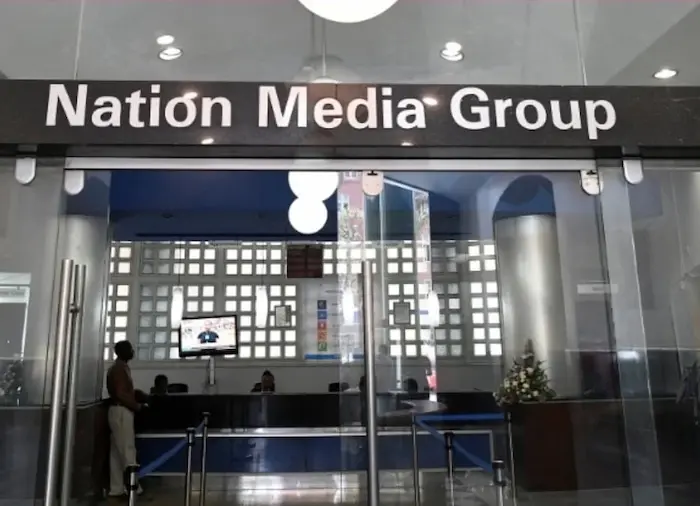

The company’s latest officially published results show that NMG recorded a KSh308.9 million net loss for the full year 2025, compared with a KSh251.5 million loss in 2024. Revenue also declined to KSh6.04 billion, down 3.1% year-on-year.
The company’s next major financial test will be its first-half 2026 results, scheduled for release on 31 August 2026.
That makes the coming results particularly important for investors, journalists and Kenya’s wider media industry.
NMG’s Losses Have Returned Despite Digital Growth
NMG’s financial difficulties are not new.
In the first half of 2025, the company reported a KSh41.7 million loss after tax, although this represented a dramatic improvement from the KSh260.2 million loss recorded in the first half of 2024.
At the same time, turnover declined by 5.7% to KSh2.993 billion.
The company said its digital business grew by 7% during the period, supported by improved monetisation and a digital audience of 63.8 million users.
However, the growth in digital business was not enough to compensate for weakness in the wider business.
NMG reduced operating expenses by 15.5% and cost of sales by 9.2%, helping to significantly reduce the operating loss.
The numbers demonstrate the central challenge facing the company:
NMG is growing its digital audience, but converting that audience into enough revenue and profit remains difficult.
2025 Made the Problem More Visible
NMG’s full-year 2025 results showed that the financial recovery was still incomplete.
According to the company’s audited financial statements, group turnover fell to KSh6.04 billion, from the previous year’s higher level.
The company said the decline was primarily caused by reduced print revenues.
At the same time, digital revenue increased by 5%, while broadcasting revenue also increased by 5%. NMG’s digital footprint grew to 64.7 million users, up from 62.5 million in 2024.
This creates a striking contrast.
Digital is growing
NMG’s digital audience continues to expand.
Broadcasting is improving
Investment in content, technology and talent helped broadcasting revenue grow.
Print is declining
But the traditional newspaper business continues to lose revenue.
The decline in print is significant because newspapers historically formed an important part of NMG’s business model.
Why Is Print Under So Much Pressure?
The Kenyan media industry has changed dramatically.
Consumers increasingly get news from:
- Smartphones
- Social media
- News websites
- YouTube
- Search engines
- Digital newsletters
- Streaming platforms
This has weakened the traditional newspaper business.
Instead of buying a newspaper every morning, a reader can receive breaking news instantly on a smartphone.
For advertisers, the shift is equally important.
Digital platforms allow advertisers to target specific audiences, measure clicks and optimise campaigns in real time.
That has put pressure on traditional print advertising.
NMG itself acknowledged in its 2025 results that reduced print revenues were responsible for the decline in overall turnover.
NMG Is Trying to Build a Digital-First Business
The company has not ignored the transformation.
In its 2024 annual report, NMG said 83% of its content was delivered digitally first by the end of 2024.
It also introduced more data-driven content strategies, newsroom integration and investment in technology.
The company said its digital audience had reached 62.4 million users in 2024, compared with 60.2 million the previous year.
NMG has also invested in:
- First-party data
- Consumer technology
- Digital products
- AI
- SEO
- Data analysis
- Multimedia content
- Digital subscriptions
- Online monetisation
These investments demonstrate that the company understands where the media industry is heading.
The challenge is turning the transformation into sustainable profitability.
The Digital Audience Is Huge — But Audience Alone Is Not Enough
One of the most interesting aspects of NMG’s situation is the size of its digital audience.
The company reported 64.7 million digital users in 2025.
That is a significant audience.
But modern media companies face an increasingly difficult question:
How much money can be generated from each digital user?
Millions of page views do not automatically translate into millions of shillings.
Advertising rates can fluctuate. Social media platforms capture part of the advertising ecosystem. Readers increasingly expect free content. And premium subscriptions must offer enough value for consumers to pay.
This is why digital transformation is more complicated than simply putting newspapers online.
NMG Is Investing in Premium Content
NMG has also been experimenting with premium and subscription-style content.
Its 2024 annual report said Business Daily had increased the proportion of premium content to more than 50%.
The company is also using events and specialised content to create additional revenue streams.
These include business conferences, investment events, leadership initiatives and other experiences.
The strategy is essentially to move beyond:
Advertising + newspaper sales
towards:
Advertising + subscriptions + digital products + events + broadcasting + premium content.
That diversification could become increasingly important as print revenues decline.
Broadcasting Remains Important
NMG is also investing in its broadcasting operations.
Its 2025 results said broadcasting revenue increased by 5%, supported by continued investment in talent, technology and content.
This matters because television and radio remain important sources of mass audiences in Kenya.
NMG’s strategy therefore isn’t to abandon traditional media overnight.
Instead, it appears to be trying to create a business where television, radio, newspapers and digital platforms work together.
For example, a television programme can generate:
TV audience → YouTube views → website traffic → social-media engagement → advertising revenue.
That cross-platform approach could become increasingly important.
Cost Cutting Has Become Part of the Strategy
NMG has also been reducing costs.
During the first half of 2025, operating expenses declined by 15.5%, according to the company’s official results.
Cost management can help a company survive declining revenues.
But there is a potential problem.
Media companies need journalists, editors, developers, designers, videographers, presenters and technology specialists to produce high-quality content.
Cutting costs too aggressively can therefore damage the very products needed to attract audiences and advertisers.
The long-term challenge for NMG is finding the balance between:
lower costs + quality journalism + technology investment + revenue growth.
The New Ownership Adds Another Dimension
NMG is also entering a new phase of its corporate history.
In March 2026, Aga Khan Fund for Economic Development announced an agreement to sell its 54.08% stake in NMG to Taarifa Ltd, owned by Tanzanian businessman Rostam Aziz.
The transaction was expected to close subject to regulatory approvals.
That ownership change could become significant for NMG’s future strategy, particularly around digital transformation and investment.
The new ownership comes at a crucial moment.
NMG needs to determine whether it can transform its large audience base into a more profitable digital business while maintaining its position as a major East African media organisation.
What About the Reported KSh357 Million H1 2026 Loss?
There have been claims circulating that NMG recorded a KSh357 million loss in the first half of 2026.
However, that figure should not currently be reported as an official NMG result.
NMG’s own investor-relations page does not yet list H1 2026 results, and the investor calendar gives 31 August 2026 as the scheduled date for the announcement of the unaudited results for the six months ended 30 June 2026.
This distinction is important for TechDrivers.
Publishing an unverified financial figure as fact could undermine the credibility of the site, particularly when covering a publicly listed company.
The KSh357 million figure should therefore be treated as unverified until NMG publishes its official results.
What We Should Watch in the H1 2026 Results
When NMG releases its official results on 31 August, several numbers will be particularly important.
1. Revenue
Has the company’s turnover continued falling, or has it stabilised?
2. Print revenue
This will show whether the decline in newspapers is accelerating or beginning to level out.
3. Digital revenue
Digital audience growth is encouraging, but the more important question is whether digital revenue is growing faster than costs.
4. Broadcasting revenue
NMG’s investment in television and other broadcasting platforms needs to generate meaningful commercial returns.
5. Operating expenses
Investors will want to know whether cost reductions are continuing.
6. Cash position
Cash generation will be crucial for a company investing in technology while dealing with declining traditional revenues.
7. Digital users and subscriptions
A growing audience is positive, but NMG needs to demonstrate that its audience can be monetised.
What NMG’s Situation Means for Kenya’s Media Industry
NMG’s financial performance is important beyond its shareholders.
The company is one of Kenya’s most influential media organisations.
Its performance illustrates the broader transformation taking place across the country’s media industry.
Traditional media companies are facing pressure from:
Google and search
Facebook and Instagram
YouTube
TikTok
X
Independent digital publishers
Podcasts
Streaming platforms
AI-generated content
At the same time, media companies must continue investing in professional journalism.
This creates a difficult economic model.
The public wants reliable information.
But producing reliable information costs money.
The companies paying journalists and running newsrooms must find sustainable ways to monetise audiences.
The Opportunity for Smaller Digital Publishers
There is also a lesson here for independent technology publishers such as TechDrivers.
The future of Kenyan media is not necessarily controlled only by the largest traditional companies.
Smaller digital publishers can compete through:
- Niche expertise
- Search-focused content
- Local reporting
- Fast publishing
- Newsletters
- Social media
- Video
- Community building
- Affiliate revenue
- Events
- Direct advertising
- Sponsored content
A technology website does not necessarily need the audience size of a national newspaper to build a sustainable business.
It needs the right audience and a sustainable monetisation strategy.
The Bigger Question: Can NMG Become Truly Digital-First?
NMG has already made significant progress toward digital transformation.
Its digital audience is growing.
Digital revenue is growing.
Broadcasting is improving.
Technology investment is continuing.
But print revenue remains under pressure, and the group has continued to report losses.
That means NMG’s next stage will be crucial.
The company needs to prove that digital growth can eventually outweigh the decline of its traditional businesses.
Conclusion
Nation Media Group’s financial story is not simply about a company making losses. It is about an entire media business model undergoing a fundamental transformation.
The company’s latest official figures show a KSh308.9 million net loss for 2025, while digital and broadcasting revenues continued to grow.
The next major test comes on 31 August 2026, when NMG is scheduled to publish its H1 2026 results.
Those results will reveal whether the company’s digital-first strategy is beginning to produce stronger financial results—or whether declining traditional media revenues continue to overwhelm the gains from digital and broadcasting.
For Kenya’s media industry, the outcome will be closely watched.
The future of media may be digital, but the biggest challenge is turning digital audiences into sustainable revenue.
