


Introduction
Social media has become an essential part of everyday life. Platforms such as Facebook, Instagram, TikTok, X, Snapchat, and YouTube allow billions of people to communicate instantly, share experiences, and access information from around the world.
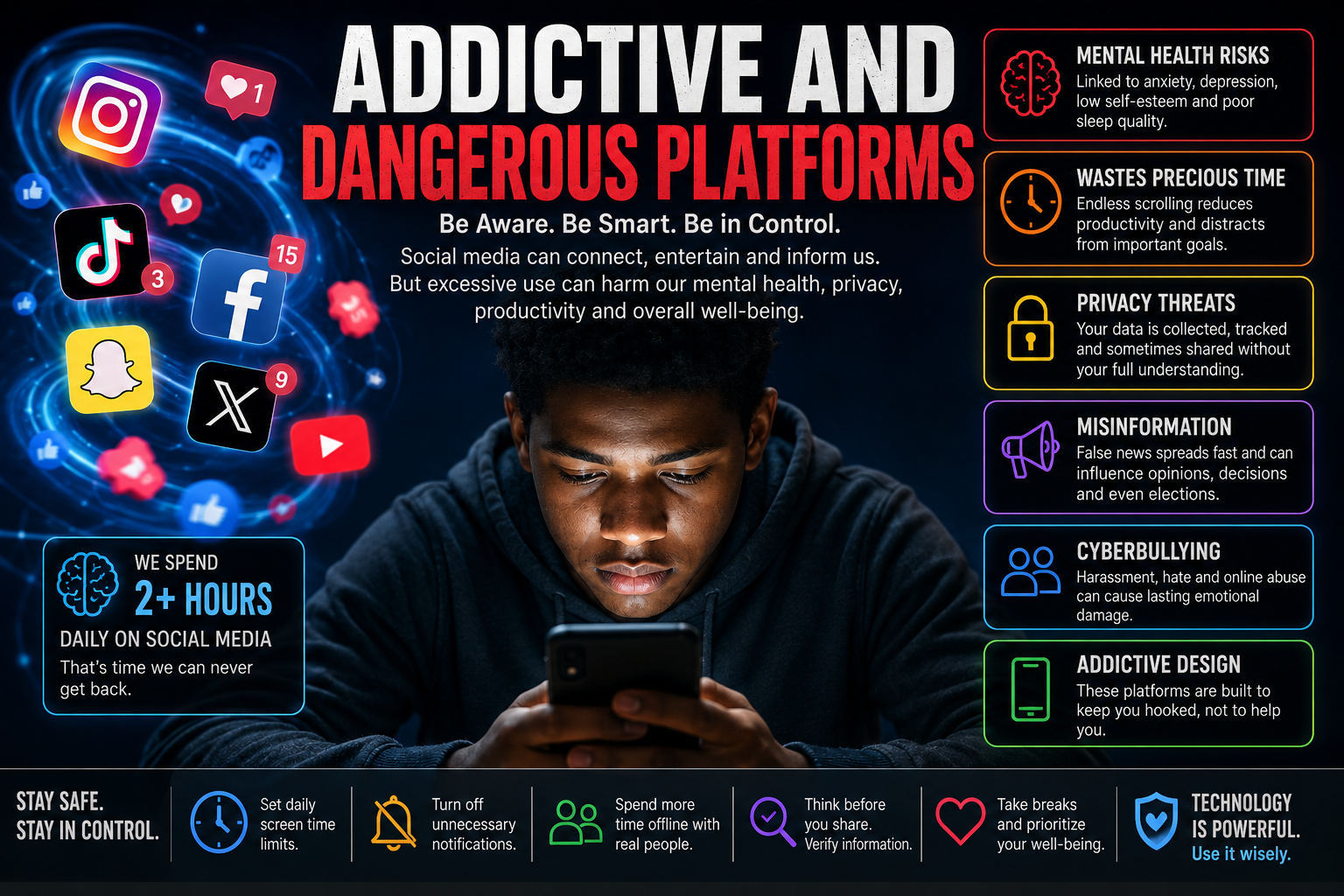
While these platforms offer many benefits, they are also designed to maximize user engagement. Features such as endless scrolling, personalized recommendations, autoplay videos, push notifications, and algorithm-driven feeds keep users returning throughout the day. For many people, this can develop into compulsive behavior that affects mental health, productivity, relationships, and overall well-being.
As governments, researchers, educators, and technology companies continue debating digital safety, understanding how social media affects our lives has never been more important.
Why Social Media Is So Addictive
Unlike traditional media, social platforms are engineered to keep users engaged for as long as possible. Their business models largely depend on advertising revenue, meaning the longer users stay on the platform, the more advertisements they view.
Several design elements contribute to this:
- Infinite scrolling that removes natural stopping points.
- Personalized AI algorithms that continuously recommend content based on viewing habits.
- Push notifications that encourage users to reopen apps.
- Likes, comments, and shares that create anticipation and reward.
- Short-form videos that deliver constant entertainment with minimal effort.
These features activate the brain’s reward system, encouraging users to seek frequent digital stimulation.
Mental Health Concerns
One of the biggest concerns surrounding social media is its impact on mental health.
Excessive use has been linked to:
- Increased anxiety and stress
- Depression symptoms
- Poor sleep quality
- Low self-esteem
- Fear of Missing Out (FOMO)
- Loneliness despite constant online interaction
Young people are particularly vulnerable because their emotional and social development is still taking place. Constant comparison with carefully curated online lifestyles can create unrealistic expectations about beauty, wealth, relationships, and success.
The Productivity Trap
Many users underestimate how much time social media consumes.
A quick five-minute check often turns into an hour of scrolling. Frequent interruptions reduce concentration, making it difficult to complete work, study effectively, or engage in meaningful conversations.
Research consistently shows that multitasking between work and social media reduces efficiency and increases mental fatigue.
Privacy Risks
Every click, search, like, comment, and interaction creates valuable data.
Social media companies collect enormous amounts of information to personalize advertising and recommend content. While personalization improves user experience, it also raises concerns about:
- Data collection
- Online tracking
- Identity theft
- Targeted advertising
- Account hacking
- Third-party data sharing
Users who overshare personal information may unknowingly expose themselves to scams, fraud, or cybercriminals.
Misinformation and Fake News
Social media has become one of the fastest ways to spread information—but also misinformation.
False stories often spread faster than verified news because they are designed to trigger strong emotional reactions.
This can influence:
- Elections
- Public health decisions
- Financial markets
- Community trust
- Public safety
Learning to verify sources before sharing content is an essential digital literacy skill.
The Rise of Cyberbullying
Unlike traditional bullying, cyberbullying follows victims everywhere.
Harassment can occur through:
- Hurtful comments
- Fake accounts
- Public humiliation
- Threats
- Private message abuse
- Sharing embarrassing content
The emotional effects can be severe, especially among teenagers and young adults.
Algorithmic Echo Chambers
Social media algorithms prioritize content users are likely to engage with.
Over time, this creates “echo chambers,” where people mainly see opinions similar to their own while opposing viewpoints become less visible.
This can increase polarization, reinforce misinformation, and make constructive discussions more difficult.
Children and Teenagers Face Greater Risks
Young users are especially susceptible because they spend significant portions of their day online.
Potential dangers include:
- Online predators
- Inappropriate content
- Screen addiction
- Sleep disruption
- Reduced physical activity
- Social comparison
- Cyberbullying
Parents and guardians play a critical role by encouraging healthy screen habits, discussing online safety, and using age-appropriate privacy settings.
Can Artificial Intelligence Make Social Media Safer?
Artificial intelligence is becoming increasingly important in content moderation.
AI can help detect:
- Hate speech
- Violent content
- Spam
- Fake accounts
- Scams
- Child exploitation material
- Harmful misinformation
However, AI is not perfect. Harmful content can still evade detection, while legitimate posts may occasionally be removed by mistake. Human oversight remains essential.
How to Use Social Media Responsibly
You don’t need to quit social media entirely to protect yourself. Small changes can make a significant difference:
- Set daily screen-time limits.
- Turn off unnecessary notifications.
- Avoid using your phone before bedtime.
- Verify information before sharing it.
- Review your privacy settings regularly.
- Follow accounts that educate and inspire rather than create negativity.
- Take regular digital detox breaks.
- Prioritize face-to-face interactions whenever possible.
Looking Ahead
Technology companies are under increasing pressure from governments, regulators, educators, and users to create safer online environments. Future improvements may include stronger age verification, greater transparency in recommendation algorithms, enhanced privacy controls, and better tools to help users manage screen time.
At the same time, digital literacy will remain one of the most important skills for navigating the online world responsibly.
Conclusion
Social media has transformed communication, education, entertainment, and business in remarkable ways. However, the same technologies that make these platforms engaging can also make them addictive and, in some cases, harmful.
The challenge is not simply to spend less time online, but to use these platforms intentionally. By understanding how social media influences attention, emotions, and decision-making, users can enjoy its benefits while reducing its risks.
The future of social media depends on a shared responsibility among technology companies, governments, educators, parents, and users to create a digital environment that prioritizes well-being alongside innovation.
