


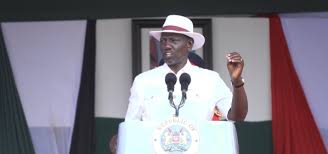
President William Ruto delivered his Madaraka Day (June 1, 2026) speech at Wajir Stadium in Wajir County, marking the first time the national celebrations were hosted in the North Eastern region (63rd Madaraka Day). The residents of Wajir felt an immense sense of honor and pride to be chosen as the hosts for their very first national event, a significant milestone that not only marked a notable achievement for their community but also played an essential role in fostering economic growth and vitality in the region.
This pivotal occasion has not only stimulated local businesses and created opportunities for entrepreneurship but has also served to affirm Wajir’s place and inclusion in the broader spectrum of national activities, allowing the people to showcase their rich culture and traditions on a larger stage. The event stands as a testament to their resilience and unity, highlighting their aspirations for future development while bringing together diverse participants from across the country to celebrate shared values and connections
The theme was “Education, Skills and the Future.” Key highlights include marking historic inclusion for Northern Kenya, an apology for past marginalization, investments in education and infrastructure, youth empowerment, and Bottom-Up Economic Transformation.
Excerpts from the Speech
“The great people of Wajir County, distinguished leaders, ladies and gentlemen, today we make history. For the first time in 63 years of self-rule, a national celebration — Madaraka Day — is being hosted here in Wajir, in the heart of Northern Kenya.
This is not a mere ceremonial gesture. It is a national declaration. It is a moment of affirmation that Madaraka — our freedom, our dignity, our self-determination — was never meant for some Kenyans and not for others. It was never meant for some regions and withheld from others. Madaraka belonged, still belongs, and will forever belong equally to every single Kenyan.”
He emphasized: “This is Wajir County. This is Kenya. This is Bottom-Up. This is what we meant when we said we would leave no one behind.”
On past marginalization:
Decades after independence, the region faced neglect, marginalization, discrimination, and policy failures (e.g., Sessional Paper No. 10 of 1965). For too long, people said the Northern region was “too dry, too remote, and too insecure to deserve any development.” Ruto called this wrong and announced the government is dismantling that legacy.
He offered a sincere apology on behalf of the nation: “Poleni sana, ndugu zetu. It was never meant to be this way.”
He highlighted reforms like easier access to national IDs for citizens in the region (ending discriminatory vetting) while protecting national security.
On Education and the Theme:
Education is central to the next phase of Kenya’s liberation. Investments include a growing education budget, hiring over 100,000 teachers (with more planned), new teacher training colleges in Wajir, Kotulo, and Mandera, and local teacher deployments. He directed integration of Duksi, Madrassa, and pastoral instruction into the national system.
Other points covered healthcare access (via SHA), youth programs like NYOTA, digital hubs, infrastructure (roads, water, power), and ongoing development to ensure no one is left behind.
