


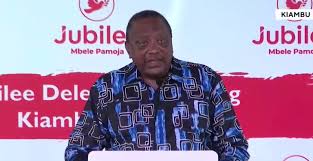
Former President Uhuru Kenyatta delivered a speech on Monday, May 25, 2026, at a Jubilee Party delegates meeting at Kiambu Golf Club.
Key Highlights from the Speech
Uhuru addressed party matters while focusing on national issues, particularly the cost of living and fuel crisis. He urged leaders to prioritize practical solutions over politics.
- Cost of Living & Fuel Prices: He highlighted the struggles of ordinary Kenyans, noting that many earn around KSh 20,000 monthly, with a large portion going to transport (fuel for matatus) and rent, leaving little for food and school fees. He called on the current administration to focus on solving these economic pressures rather than blame games.
- Against Tribalism & Division: Uhuru warned against “politics of division” and hate speech, referencing recent inflammatory remarks (linked to UDA’s Hassan Omar on Coast land issues, perceived as targeting certain communities). He urged leaders to shun tribal rhetoric, noting it risks echoing the tensions of 2007/2008. He emphasized unity: problems like the economy affect all Kenyans, regardless of ethnicity.
- Party & Political Context: The meeting prepared Jubilee for 2027 elections. Uhuru clarified his role as transitional/organizational within the party, not a personal political comeback. He stressed building strong structures and evaluating leaders properly.
People’s Reaction
The speech drew significant attention, with mixed responses online — some praising him for speaking on public hardships, others criticizing his past record or questioning his timing. It comes amid ongoing public concerns over fuel prices and economic pressures.
Broader Context for Uhuru/Jubilee Economic Stance
Uhuru’s past presidency emphasized infrastructure (roads, SGR, stadia), manufacturing (Big Four), and Vision 2030 continuity. Jubilee has historically leaned toward mixed economy approaches with state-led projects. In opposition now, the emphasis shifts to “relief for mwananchi” amid 2026 pressures (global oil volatility, local taxes/Fuel Bill debates). The speech aligns with building a 2027 platform around cost-of-living relief and national unity, likely with figures like Fred Matiang’i.
Bottom line:
This was more a political-economic critique and unity call than a detailed policy manifesto. Uhuru effectively amplified public pain points and positioned Jubilee as ready to partner on fixes, but voters and analysts will look for fleshed-out ideas (e.g., in future manifestos) on fuel stabilization, agricultural productivity, job creation, or fiscal relief. Economic policy success anywhere depends on execution amid global headwinds, not just speeches.
