
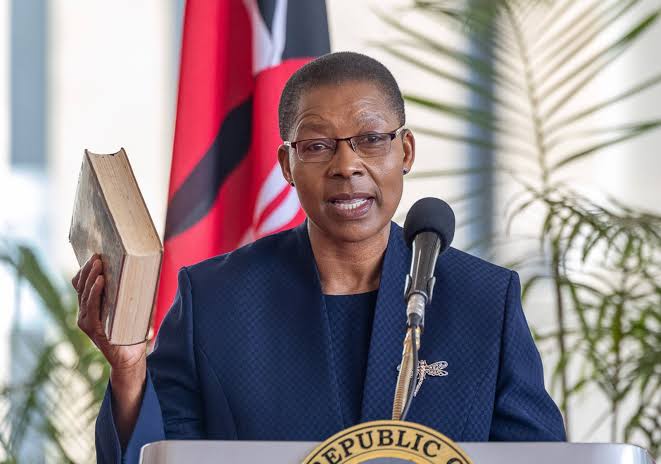

Kenya’s Sh204.3 billion Safaricom share transaction has entered another legal phase after Attorney General Dorcas Oduor filed a Notice of Appeal against the High Court ruling that nullified the government’s sale of a 15% stake in Safaricom to Vodacom.
The Notice of Appeal was filed on September 16, 2026, one day after a three-judge High Court bench declared the divestiture invalid, null and void and ordered that the 15% shareholding be restored to the Government of Kenya on behalf of the people.
The government has rejected the findings and says it will challenge the decision through the Court of Appeal. National Treasury Cabinet Secretary John Mbadi said the government maintains that the transaction followed the required safeguards and procedures.
The dispute now puts one of Kenya’s largest corporate transactions back before the courts.
What Happened to the Safaricom Stake?
The Government of Kenya originally held a 35% stake in Safaricom.
Under the transaction, the government sold 15% of its holding to Vodacom at KSh34 per share, reducing its direct stake in Safaricom to 20%.
The shares involved amounted to approximately 6 billion Safaricom shares, with the direct share-sale proceeds estimated at KSh204.3 billion.
The transaction was completed on June 30, 2026, after the Court of Appeal lifted earlier orders that had temporarily blocked the transfer.
The government also received KSh40.2 billion as an advance against future dividends associated with its remaining Safaricom holding, bringing the broader cash proceeds associated with the arrangement to about KSh244.5 billion.
The ownership structure consequently changed significantly, with Vodacom’s interest rising to about 55% while the Kenyan government’s direct holding fell to 20%.
Why Did the High Court Nullify the Transaction?
The September 15 ruling was not simply about the price paid for the Safaricom shares.
The three-judge bench focused heavily on the process used to approve and implement the divestiture.
The court found that the decision involved a major public asset and therefore required meaningful public participation and adequate disclosure of relevant information.
According to the ruling, the public did not receive sufficient information to participate meaningfully in the decision. The judges also questioned the way information concerning the intended buyer and structure of the transaction was presented to government decision-makers and the public.
The court further found that the transaction had characteristics of a merger, acquisition and takeover because the resulting ownership structure gave Vodacom effective control of Safaricom.
The judges therefore quashed agreements, approvals and arrangements associated with the transaction and ordered the 15% shareholding to be restored to the state.
What Is Dorcas Oduor Appealing?
The Attorney General’s Notice of Appeal signals that the government intends to challenge parts of the High Court’s decision at the Court of Appeal.
National Treasury CS John Mbadi has said the government disagrees with the court’s conclusion that the transaction failed constitutional and procedural safeguards.
The government argues that the partial divestiture was undertaken within the framework approved for the transaction and that protections were included for Safaricom employees, dealers and business partners.
The appeal therefore creates a new legal stage in which the Court of Appeal will consider the issues raised by the parties.
For now, the High Court judgment remains the latest substantive ruling on the legality of the transaction.
The Safaricom Deal Was Already Completed
One of the most complicated aspects of the case is that the transaction was not merely proposed when the High Court delivered its judgment.
The share transfer had already been completed on June 30.
Safaricom confirmed that the transaction was completed after the Court of Appeal lifted earlier conservatory orders, allowing the sale to proceed while the substantive legal challenge remained before the High Court.
This creates practical questions about how an already-completed cross-border share transaction would be unwound if the High Court ruling ultimately remains in force.
The High Court has ordered restoration of the shares, but the financial and corporate consequences of implementing that order are likely to become part of the continuing legal process.
What Does the Dispute Mean for Safaricom?
For Safaricom customers, the court case does not mean the company’s mobile, M-PESA, internet or enterprise services have stopped.
Safaricom continues to operate its business.
The dispute concerns the ownership and legality of the government’s transfer of a 15% stake rather than the company’s telecommunications licences or day-to-day consumer services.
Safaricom has also said that it continues to operate in Kenya and Ethiopia while the legal proceedings continue.
However, the ownership question is important because Safaricom is one of Kenya’s most strategically significant companies.
Its business spans mobile communications, broadband, M-PESA, enterprise services and digital financial services.
Why the Government’s 20% Stake Matters
Before the transaction, the Kenyan government held 35% of Safaricom.
The proposed divestiture was designed to reduce that direct holding to 20% while generating non-tax revenue for the government.
The National Treasury described the partial divestment as a way of mobilising resources for national development while retaining a strategic government interest in Safaricom.
The legal challenge therefore has implications beyond the ownership of shares.
It raises questions about how Kenya disposes of major public assets, how much information must be disclosed before such transactions are approved and how public participation should work when the government is dealing with strategic commercial assets.
What Happens to the Sh204.3 Billion?
The financial side of the dispute could become one of the most closely watched issues in the appeal.
The government has already received proceeds associated with the transaction, while the High Court has ordered the shares restored to state ownership.
This creates a practical question: how would the money and shares be reconciled if the court’s order is ultimately upheld?
The answer will depend on the orders of the appellate courts and the legal mechanisms used to implement them.
Reports indicate that proceeds from the transaction were channelled into government infrastructure financing structures, adding another layer to the issue.
It would therefore be premature to assume that the transaction will simply be reversed through a straightforward exchange of shares for cash.
What Does the Appeal Mean for Vodacom?
Vodacom is directly affected because the company acquired the additional Safaricom stake.
The transaction increased its effective ownership interest in Safaricom to approximately 55%.
That increased ownership gave Vodacom a significantly larger position in Kenya’s largest telecommunications company.
The High Court ruling, however, has now challenged the legal basis on which that ownership change occurred.
Vodacom has also indicated that it will appeal the judgment, adding another layer to the legal proceedings.
The next stages of the case will therefore be important not only for the Kenyan government but also for Vodacom and other Safaricom shareholders.
Why This Case Matters to Kenyans
The Safaricom dispute matters because the company is not an ordinary listed business.
Safaricom has a central role in Kenya’s telecommunications and digital financial ecosystem.
M-PESA is used by millions of Kenyans for payments, transfers, savings and other financial services, while Safaricom’s network provides mobile connectivity to consumers and businesses across the country.
The government also remains a shareholder.
Consequently, changes in ownership can have implications for public policy, government revenue, corporate governance and the country’s digital economy.
The case also provides an important test of how constitutional requirements such as transparency, accountability and public participation apply to large commercial transactions involving state assets.
What Happens Next?
The immediate next step is the appeal process.
The government has formally signalled its intention to challenge the High Court decision, while Vodacom has also indicated that it will appeal.
The Court of Appeal will therefore become the next major forum for the dispute.
Several questions will be important as the case develops:
- Whether the High Court correctly interpreted the constitutional public-participation requirements.
- Whether the transaction was properly characterised as a partial divestiture or as a transaction involving a change of control.
- Whether the approvals and procurement processes complied with Kenyan law.
- How the court orders can be implemented given that the shares were already transferred.
- How the financial proceeds would be treated if the transaction is ultimately reversed.
- Whether the transaction can be restructured or subjected to additional legal and regulatory processes.
Until the appellate process is completed, the final ownership position remains subject to the courts.
Safaricom Stake Sale: Key Numbers
| Item | Details |
|---|---|
| Government’s original stake | 35% |
| Stake sold | 15% |
| Sale price | KSh34 per share |
| Direct share-sale proceeds | About KSh204.3 billion |
| Government stake after transaction | 20% |
| Vodacom’s resulting interest | About 55% |
| Transaction completion | June 30, 2026 |
| High Court ruling | September 15, 2026 |
| Government appeal | Filed September 16, 2026 |
The figures above describe the transaction and subsequent legal developments reported by the government, Safaricom and established Kenyan news organisations.
Frequently Asked Questions
Did the government sell all its Safaricom shares?
No. The transaction involved 15% of the government’s original 35% holding. The government was left with a direct 20% stake following completion of the transaction.
How much was the Safaricom stake sold for?
The 15% stake was sold at KSh34 per share, generating approximately KSh204.3 billion in direct proceeds.
Why did the High Court cancel the Safaricom stake sale?
The High Court found that the transaction violated constitutional and statutory requirements, including requirements relating to meaningful public participation, transparency and disclosure of material information. The court ordered the shares restored to government ownership.
Has the government accepted the High Court ruling?
No. Attorney General Dorcas Oduor has filed a Notice of Appeal, while Treasury CS John Mbadi has said the government disagrees with the ruling and intends to challenge it.
Will Safaricom services be affected?
The legal dispute concerns ownership of shares. Safaricom continues to operate its telecommunications, M-PESA and other services.
What happens next?
The dispute moves to the Court of Appeal. The appellate proceedings will determine whether the High Court’s findings and orders are upheld, varied or overturned.
What This Means for Kenya’s Digital Economy
The Safaricom ownership dispute is bigger than a single share transaction.
It touches on the relationship between government ownership, private investment, public participation and Kenya’s rapidly expanding digital economy.
For the government, the transaction was part of a strategy to generate non-tax revenue while retaining a stake in a strategically important company.
For Vodacom, the transaction represented a major increase in its ownership and influence over Safaricom.
For the public, the court case has highlighted questions about how major public assets should be disposed of and what information citizens should receive before such decisions are made.
The Court of Appeal will now have an opportunity to examine those issues.
For Kenyans, the most important development to watch is therefore not simply whether the Sh204.3 billion transaction survives, but what the final court decisions establish about the rules governing future transactions involving major public assets.
This story will be updated as the Court of Appeal proceedings develop.
