

Close Menu

    Subscribe to Updates

    Get the latest creative news from FooBar about art, design and business.

    What's Hot

    Telenor Builds Sovereign AI Factory on Red Hat

    March 3, 2026

    Central Bank of Kenya approved hiding phone numbers

    March 3, 2026

    Israel’s economy growth despite regional conflict

    March 3, 2026
    Facebook X (Twitter) Instagram
    Facebook X (Twitter) Instagram
    Tech DriversTech Drivers
    Subscribe
    • Home
    • Cars

      Car Soko: Kenya’s Premier Car Mart

      February 8, 2026

      Why People Love Prado 150

      January 31, 2026

      3 Types of engine oil

      January 21, 2026

      How to check oil in your car

      January 21, 2026

      What causes vibrations in the car

      January 21, 2026
    • Tech
    • Mobiles
      • Gaming
    • Insights
      • How to
      • Insights
    Tech DriversTech Drivers
    Home » Space Telescope captured infrared images of a nebula
    Science

    Space Telescope captured infrared images of a nebula

    AmosBy AmosFebruary 26, 2026No Comments2 Mins Read
    Facebook Twitter Pinterest LinkedIn Tumblr Email
    James Telescope
    Share
    Facebook Twitter LinkedIn Pinterest Email

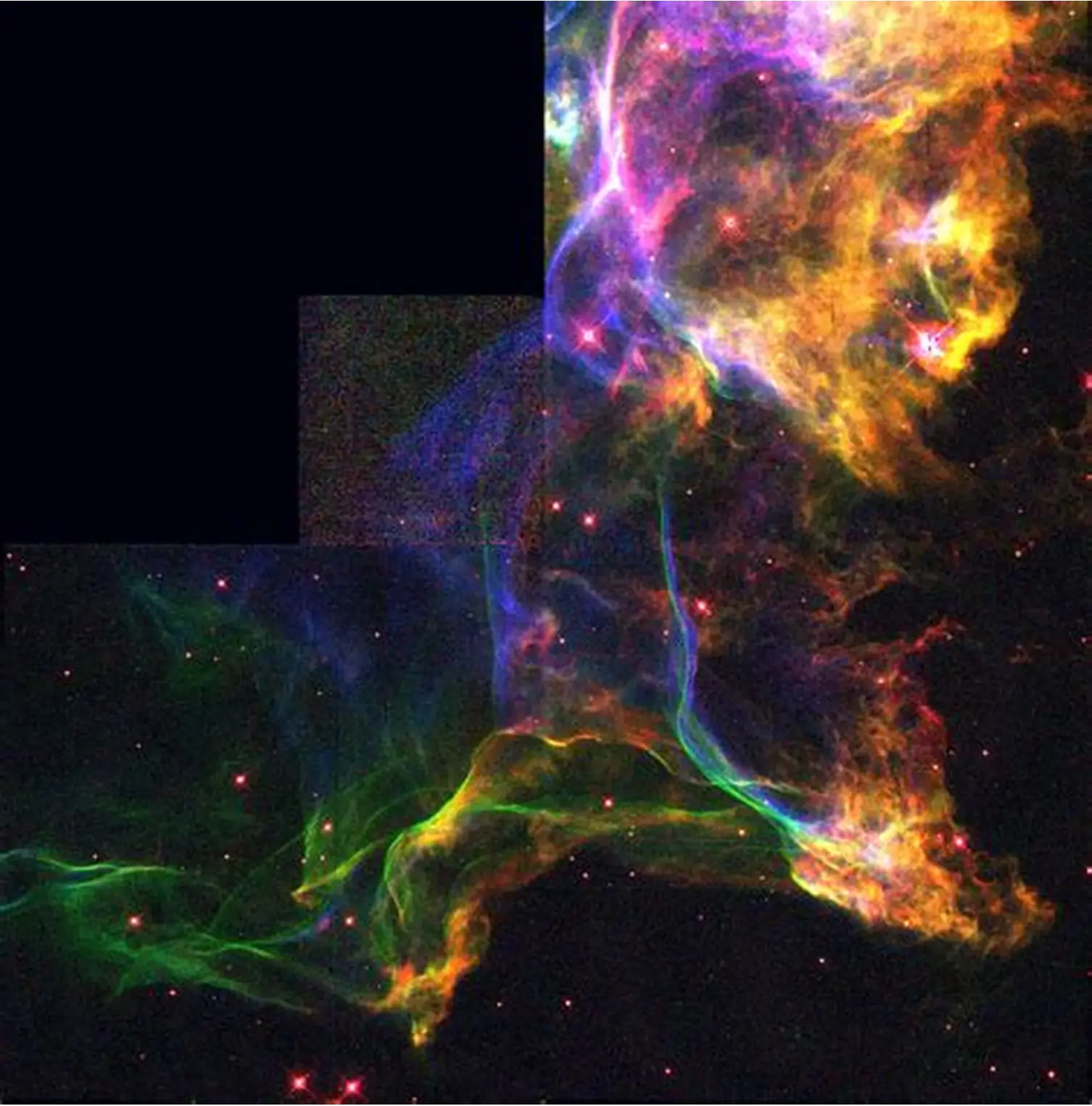
    NASA’s James Webb Space Telescope captured infrared images of a nebula called the “Exposed Cranium” (PMR 1), a cloud of gas and dust around an ageing star. Webb’s cameras reveal an inner “brain” region and an outer shell of gas in striking detail. Astronomers first spotted PMR 1 more than a decade ago with the Spitzer Space Telescope, and Webb’s new data provide much greater detail and resolution.

    Webb’s Revealing View

    According to NASA, the PMR 1 nebula exists in the southern constellation Vela at a distance of approximately 5000 light-years from Earth. The nebula appears to Webb’s near-infrared and mid-infrared images as a see-through skull which contains a luminous “brain” within. The telescope detects an external hydrogen gas bubble which surrounds an internal gas cloud that contains mixed gases. The dark lane divides the nebula into two hemispheres, while it probably marks the path of materials which a dying star has ejected. The scientists observed the nebula because its appearance resembles a human skull and they used the observations to investigate the star’s last explosive emissions.

    A Star’s Final Breath

    This is a planetary nebula, which occurs when a mid-sized star sheds its outer material. These nebulae have a very short lifespan of 20,000 years. The images taken by the Webb telescope record this brief moment in the life cycle of a star. The life of the central star, depending on its mass, will end in a supernova explosion if it is massive or in the formation of a white dwarf if it is like our sun. In either scenario, the Exposed Cranium Nebula provides a colourful look at the end of a star’s life.

    Share this:

    • Share on Facebook (Opens in new window) Facebook
    • Share on X (Opens in new window) X
    Share. Facebook Twitter Pinterest LinkedIn Tumblr Email
    Amos

    Related Posts

    Gas Spur’ Spilling From Galaxy NGC 4388’s Core

    January 4, 2026
    Add A Comment
    Leave A Reply Cancel Reply

    Editors Picks
    8.5

    Apple Planning Big Mac Redesign and Half-Sized Old Mac

    January 5, 2021

    Autonomous Driving Startup Attracts Chinese Investor

    January 5, 2021

    Onboard Cameras Allow Disabled Quadcopters to Fly

    January 5, 2021
    Top Reviews
    9.1

    Review: T-Mobile Winning 5G Race Around the World

    By Amos
    8.9

    Samsung Galaxy S21 Ultra Review: the New King of Android Phones

    By Amos
    8.9

    Xiaomi Mi 10: New Variant with Snapdragon 870 Review

    By Amos
    Advertisement
    Demo
    Facebook X (Twitter) Instagram
    • Home
    • Tech
    • Mobiles
    • How to
    © 2026 Techdirvers Designed by Codelabpros.

    Type above and press Enter to search. Press Esc to cancel.

    Powered by
    ►
    Necessary cookies enable essential site features like secure log-ins and consent preference adjustments. They do not store personal data.
    None
    ►
    Functional cookies support features like content sharing on social media, collecting feedback, and enabling third-party tools.
    None
    ►
    Analytical cookies track visitor interactions, providing insights on metrics like visitor count, bounce rate, and traffic sources.
    None
    ►
    Advertisement cookies deliver personalized ads based on your previous visits and analyze the effectiveness of ad campaigns.
    None
    ►
    Unclassified cookies are cookies that we are in the process of classifying, together with the providers of individual cookies.
    None
    Powered by