


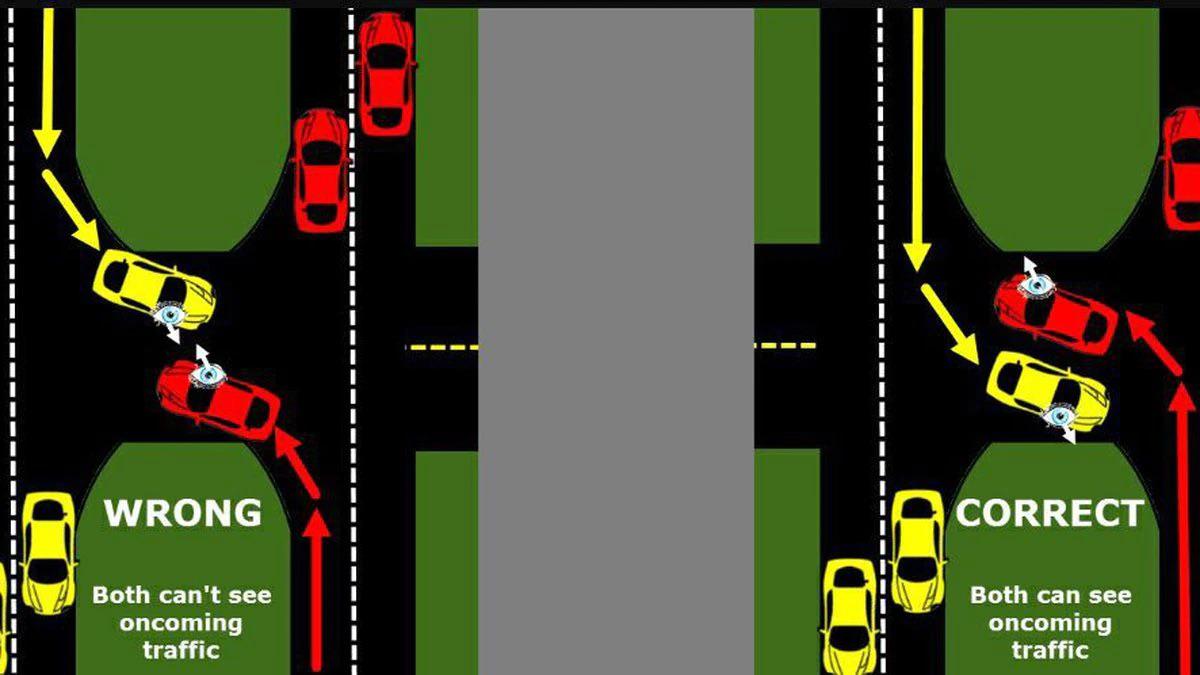
The main types of turns drivers make on the road (also called turnabouts when changing direction) include these common categories, based on standard driving rules and lessons:
- Left Turn
This is when you turn left at an intersection or onto another road. You usually start from the leftmost lane (or near the center line on a two-way road), signal early, yield to oncoming traffic and pedestrians, and complete the turn into the nearest appropriate lane. Left turns are often more challenging because you cross oncoming traffic. - Right Turn
You turn right from the rightmost lane or edge of the road. Signal, slow down, check for pedestrians/cyclists, and turn into the closest lane. In many places, you can turn right on red after a full stop (unless prohibited by a sign). - Three-Point Turn (also called a Y-turn or K-turn)
Used to reverse direction on a narrow road where a U-turn isn’t possible or safe. You pull to the right, turn left across the road, reverse while turning right, then go forward left to complete the 180-degree change. It’s a common road test maneuver. - U-Turn
A 180-degree turn to go back the way you came, usually on a wider road or where allowed (check local laws—some places ban them on certain roads or require signals/visibility). It’s quicker than a three-point turn but needs more space.
Some sources also mention:
- Two-Point Turn — Using a driveway or side street to turn around (pull in forward, back out turning, or vice versa).
- Specialized types like Michigan left (or median U-turn) — Where you pass the intersection, then U-turn at a median to effectively turn left indirectly (common in some regions to reduce accidents).
Always signal at least depending on your country’s rules before turning, check mirrors and blind spots, yield appropriately, and adjust for road conditions. Safe turning reduces many common accidents at intersections.
Key Turning Techniques:
- Signaling: Always activate turn signals approximately 100 feet before the turn.
- Speed Control: Brake to reduce speed to 5–10 mph before initiating the turn.
- Steering: Use a hand-over-hand or push-pull method to maintain control, keeping hands at 9 and 3 o’clock.
- Positioning: For right turns, keep the car close to the right curb to avoid drifting; for left turns, position near the center line.
