


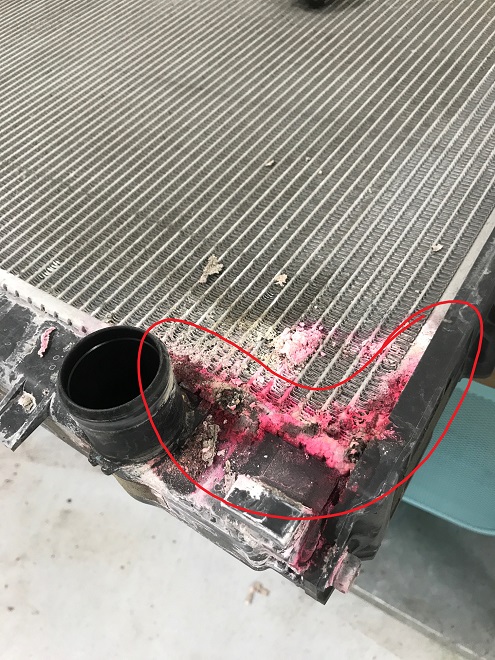
Here are the most common signs that your car’s radiator is leaking coolant. A radiator leak can lead to engine overheating and serious damage if not addressed quickly, so pay attention to these indicators and avoid driving if symptoms are severe.
- Puddles or stains under the car — Look for bright-colored (usually green, orange, pink, or sometimes yellow/blue depending on the coolant type) fluid on your driveway, garage floor, or parking spot after the car has been parked. Coolant leaks often form sticky puddles near the front of the vehicle (under the engine area). It’s not oil (which is darker and thicker) and often has a sweet smell.
- Low coolant levels — Check your coolant reservoir (usually a translucent tank under the hood with “min” and “max” lines). If the level drops noticeably over a short time (even without visible puddles, as it could be a slow leak or evaporating), it’s a red flag. You may need to top it up frequently.
- Rising temperature gauge or overheating — The engine temperature gauge (on your dashboard) creeps higher than normal, enters the red zone, or the temperature warning light comes on. This happens because low coolant can’t properly cool the engine.
- Sweet smell inside or outside the car — Antifreeze/coolant has a distinctive sweet (almost like maple syrup) odor, especially when the engine is hot. You might notice it from under the hood, in the cabin (if leaking into the heater core), or while driving.
- Visible corrosion, rust, or discoloration on the radiator — Inspect the radiator (front of the engine bay, behind the grille) for rust, white/green crusty buildup, wet spots, or stains on the fins/hoses. Corrosion often causes or worsens leaks.
- Other related symptoms — Steam or white smoke from under the hood (coolant hitting hot parts), reduced cabin heat (if internal leak), or milky oil (head gasket issue, but sometimes linked to severe overheating from low coolant).
What to do if you spot these signs — Stop driving if the engine is overheating to prevent major damage (like warped heads). Check coolant levels when the engine is cool, add the right type if low, and get it inspected by a mechanic ASAP. Leaks can come from the radiator itself, hoses, water pump, or cap, so professional diagnosis (like pressure testing) is often needed.Regularly checking your coolant and looking under the car after parking can catch issues early.
