


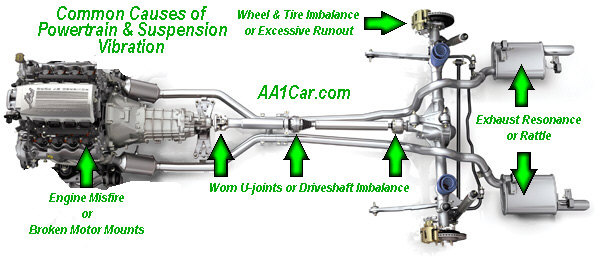
Car vibrations can stem from various issues, ranging from simple maintenance problems to more serious mechanical faults. The exact cause often depends on when and how the vibration occurs (e.g., at idle, during acceleration, at high speeds, or when braking). Here’s a breakdown of the most common causes:
1. Tire and Wheel Problems (Most Frequent Cause)
These are responsible for the majority of vibrations, especially those felt at highway speeds (around 60–80 km/h or higher).
- Unbalanced tires/wheels → Causes shaking that worsens with speed.
- Worn, damaged, or unevenly worn tires (e.g., cupping, flat spots, or broken belts inside the tire).
- Bent rims/wheels or loose lug nuts.
- Solution: Get a wheel balance, tire rotation, or alignment check. Replace tires if they’re worn unevenly or damaged.
2. Brake Issues Vibrations
That appear mainly when braking are often brake-related.
- Warped or uneven brake rotors/discs → Causes pulsing or shaking through the steering wheel or pedal.
- Worn brake pads or caliper problems.
- Solution: Have the brakes inspected and rotors resurfaced or replaced if warped.
3. Suspension and Steering Components
These can cause vibrations that feel through the whole car or steering.
- Worn ball joints, tie rods, control arm bushings, or shock absorbers/struts.
- Loose or damaged steering components.
- Solution: A suspension inspection (often during alignment) can identify worn parts needing replacement.
4. Drivetrain Problems
More common in rear-wheel-drive, all-wheel-drive, or older vehicles.
- Worn or damaged CV joints/axles (front-wheel drive) → Often causes clicking + vibration during turns or acceleration.
- Bent or unbalanced driveshaft or worn U-joints (rear-wheel drive).
- Solution: Professional drivetrain inspection; these parts usually need replacement.
5. Engine and Transmission-Related Vibrations
These are often felt at idle, low speeds, or when stopped (with the engine running).
- Worn engine or transmission mounts → Causes the whole car to shake, especially when shifting gears or at idle.
- Misfiring engine (bad spark plugs, dirty fuel injectors, ignition coils, etc.).
- Vacuum leaks or other engine performance issues.
- Solution: Check engine mounts and scan for diagnostic trouble codes if the check engine light is on.
Quick Diagnostic Tips
- Vibration only at high speeds → Almost always tires/wheels.
- Vibration only when braking → Brake rotors/pads.
- Vibration at idle or stopped → Engine mounts, misfire, or accessories (e.g., AC compressor).
- Steering wheel shakes → Usually front tires, brakes, or suspension.
- Whole car shakes → Could be engine mounts, drivetrain, or severe tire issues.
If the vibration is new, sudden, or accompanied by noises, pulling to one side, or warning lights, get it checked by a mechanic soon—some issues (like bad tires or brakes) can become safety hazards if ignored. Start with the cheapest/easiest checks: tire pressure, visual tire inspection, and wheel balancing.
